Relationships don't struggle because people care too little.
They struggle because partners experience, interpret, and protect themselves differently.
Relational Integrity in Relationships
Relational Integrity in Relationships introduces the Relational Integrity Framework, an original, neurodiversity-affirming approach to understanding recurring conflict, rebuilding trust, and strengthening connection without requiring either partner to abandon themselves.
Rather than focusing solely on communication skills, this workbook helps couples understand why communication becomes difficult in the first place. Through practical exercises, reflection prompts, clinical illustrations, and evidence-informed concepts, you'll learn to recognize the protective patterns that drive recurring conflict and develop new ways of relating grounded in curiosity, accountability, dignity, and care.
Inside you'll explore:
-
Understanding individual differences and why they matter
-
The Mutual Protection Dynamic and recurring conflict cycles
-
Meaning-making and how assumptions shape relationships
-
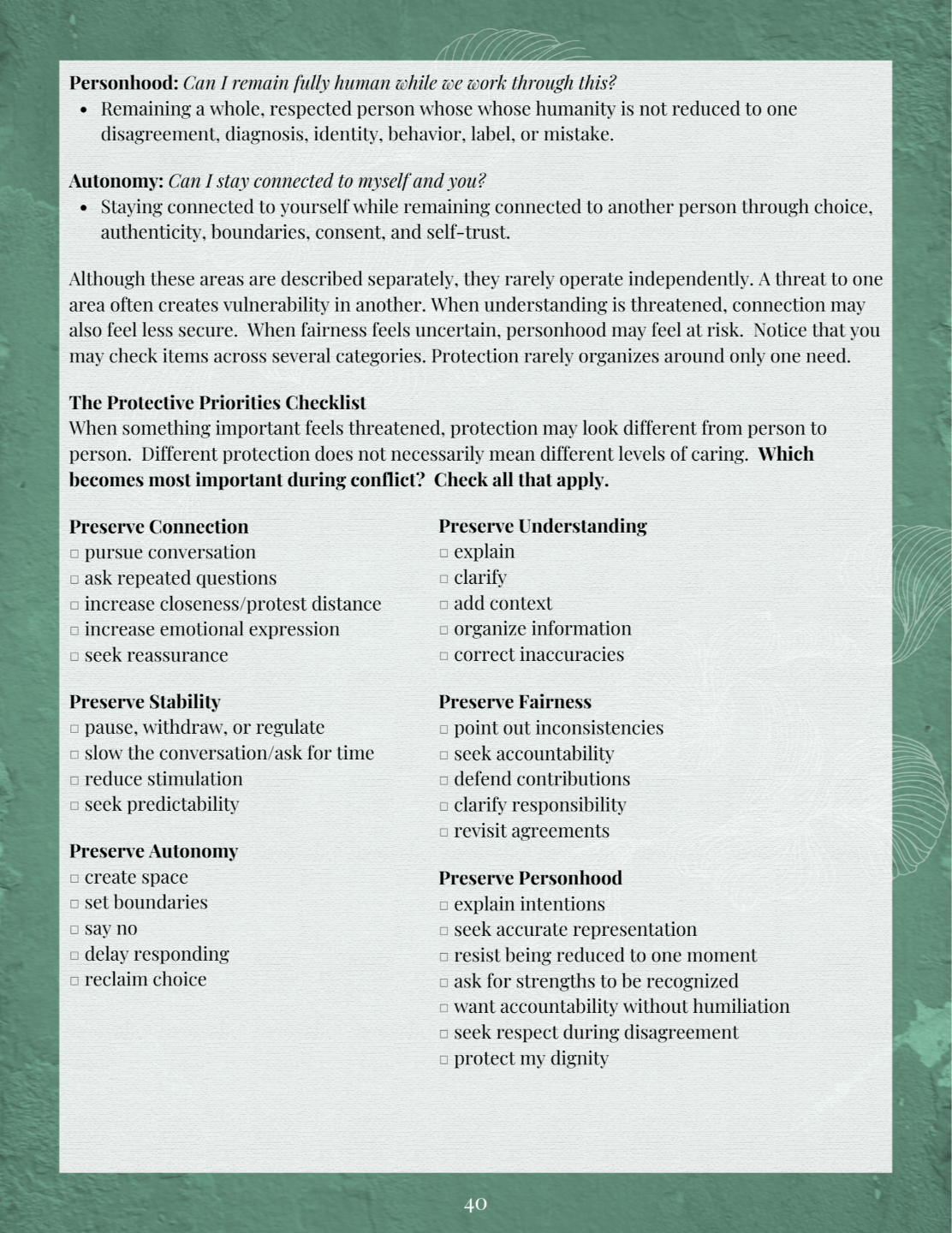
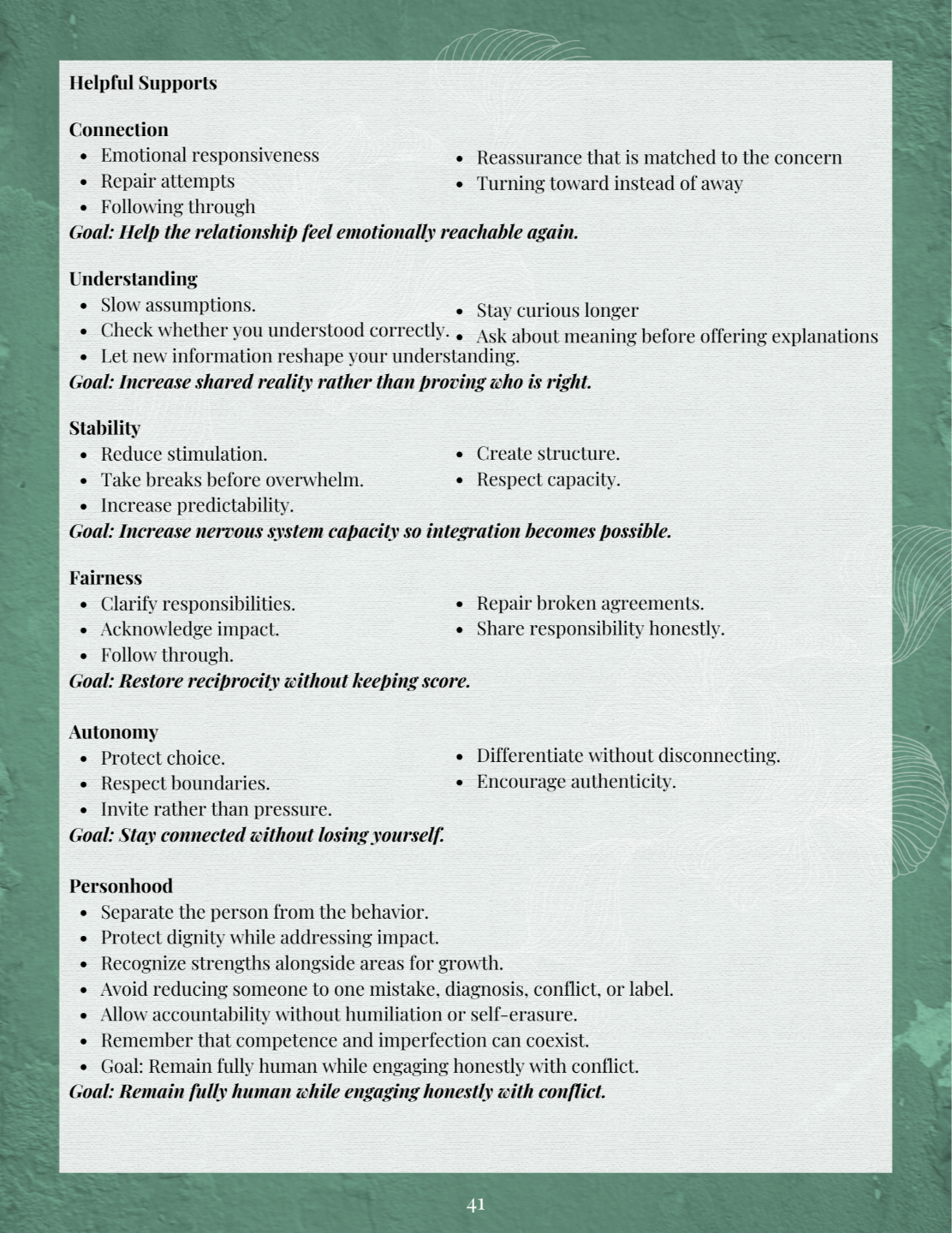
The Six Protective Priorities that influence behavior
-
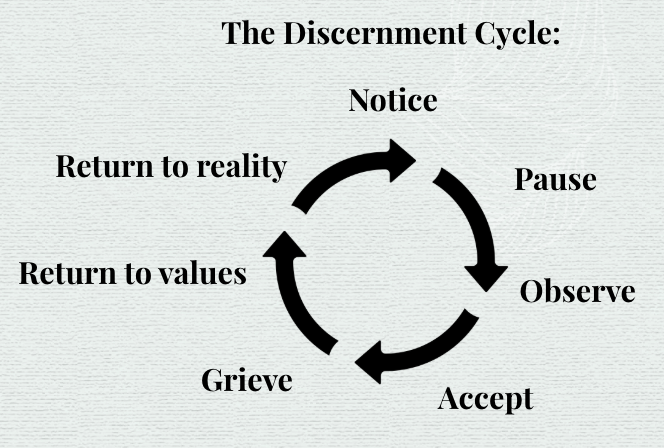
Discernment and responding from reality rather than protection
-
Accountability that preserves dignity rather than creating shame
-
Integration and sustaining relational growth over time
Whether you are working independently, alongside your partner, or with the support of a therapist, this workbook provides practical tools to help you build relationships where both connection and authenticity can thrive.
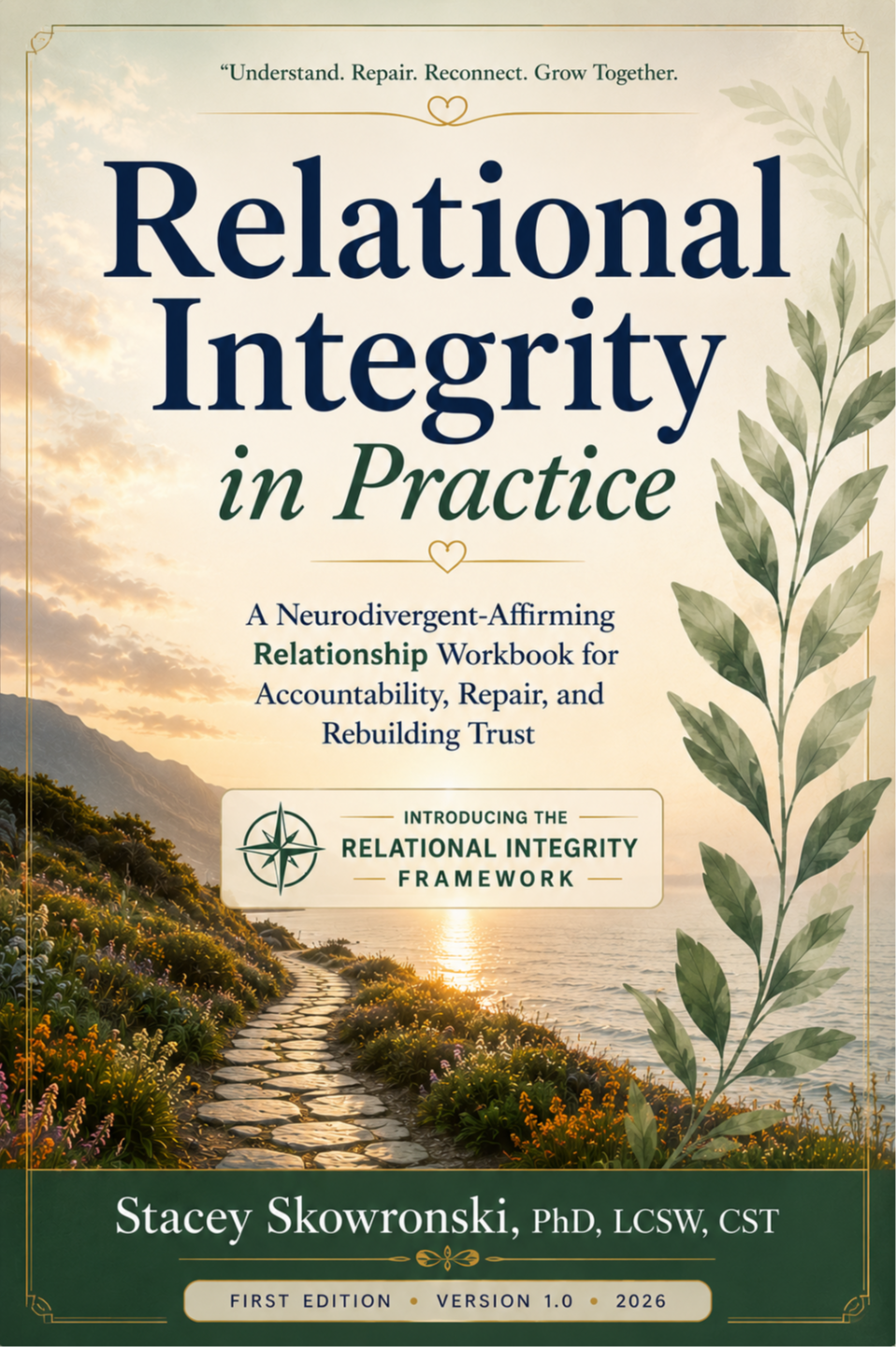
Relational Integrity Relationship Workbook
$59
Top features
-
PDF download with fillable version
-
7 Chapters
-
70+ Pages
-
Practical Exercises
-
Couples Activities
-
Neurodiversity-Affirming

Professional Use License
$20
This license gives the individual purchaser permission to use designated materials from the Relational Integrity Workbook with clients as part of the professional services they personally provide.
Why Do We Keep Having the Same Conflict?
You're having two different conversations at the same time.
One partner is asking:
"Can we stay connected?"
The other is asking:
"Can I remain myself?"
Neither question is wrong.
But when those questions go unseen, couples often become trapped in cycles of misunderstanding, defensiveness, and repeated conflict.
The Relational Integrity Framework helps you recognize what each person is trying to protect so that conflict becomes an opportunity for understanding rather than another painful cycle.
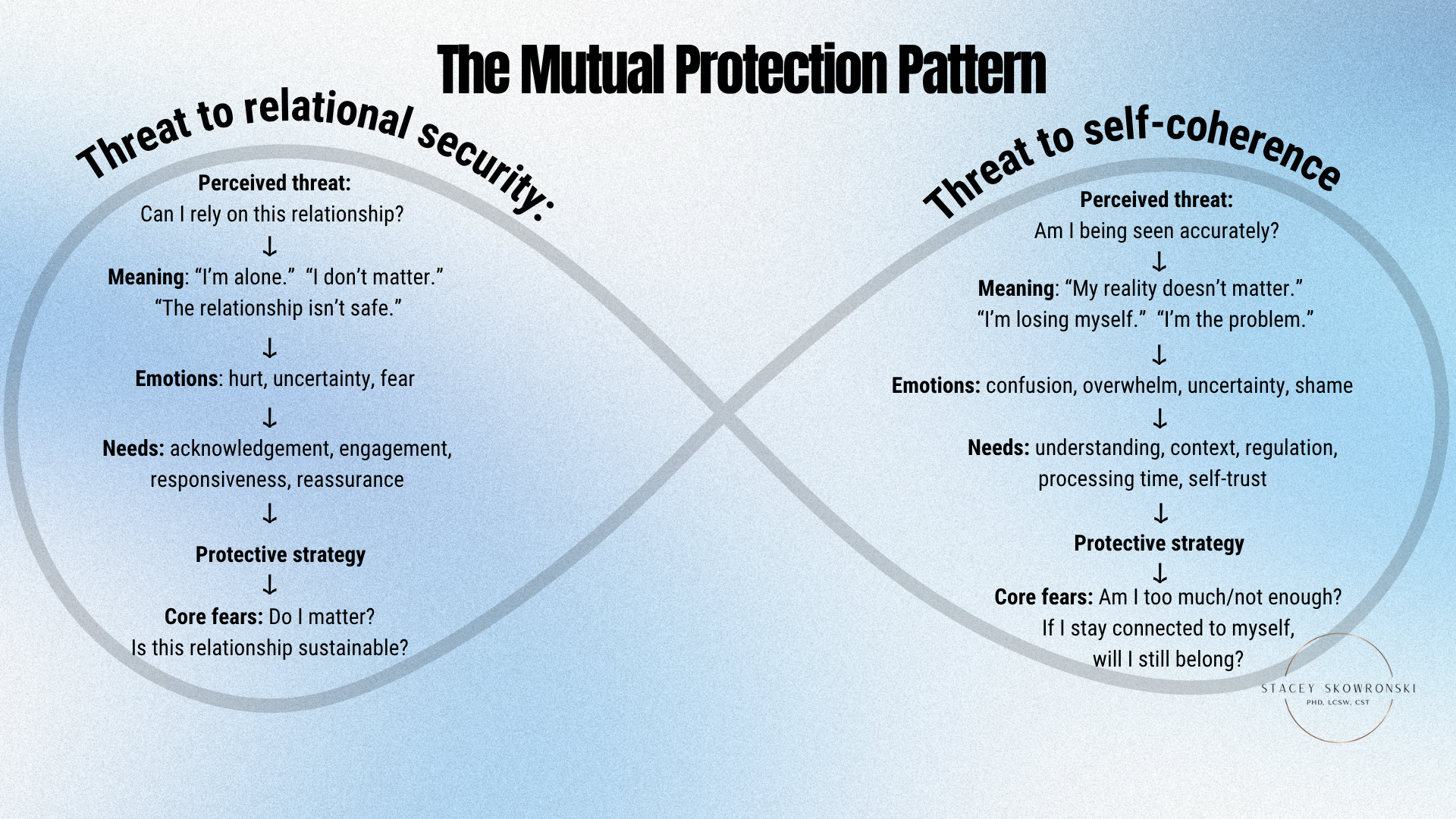
Once you can see the pattern, you can begin changing it.
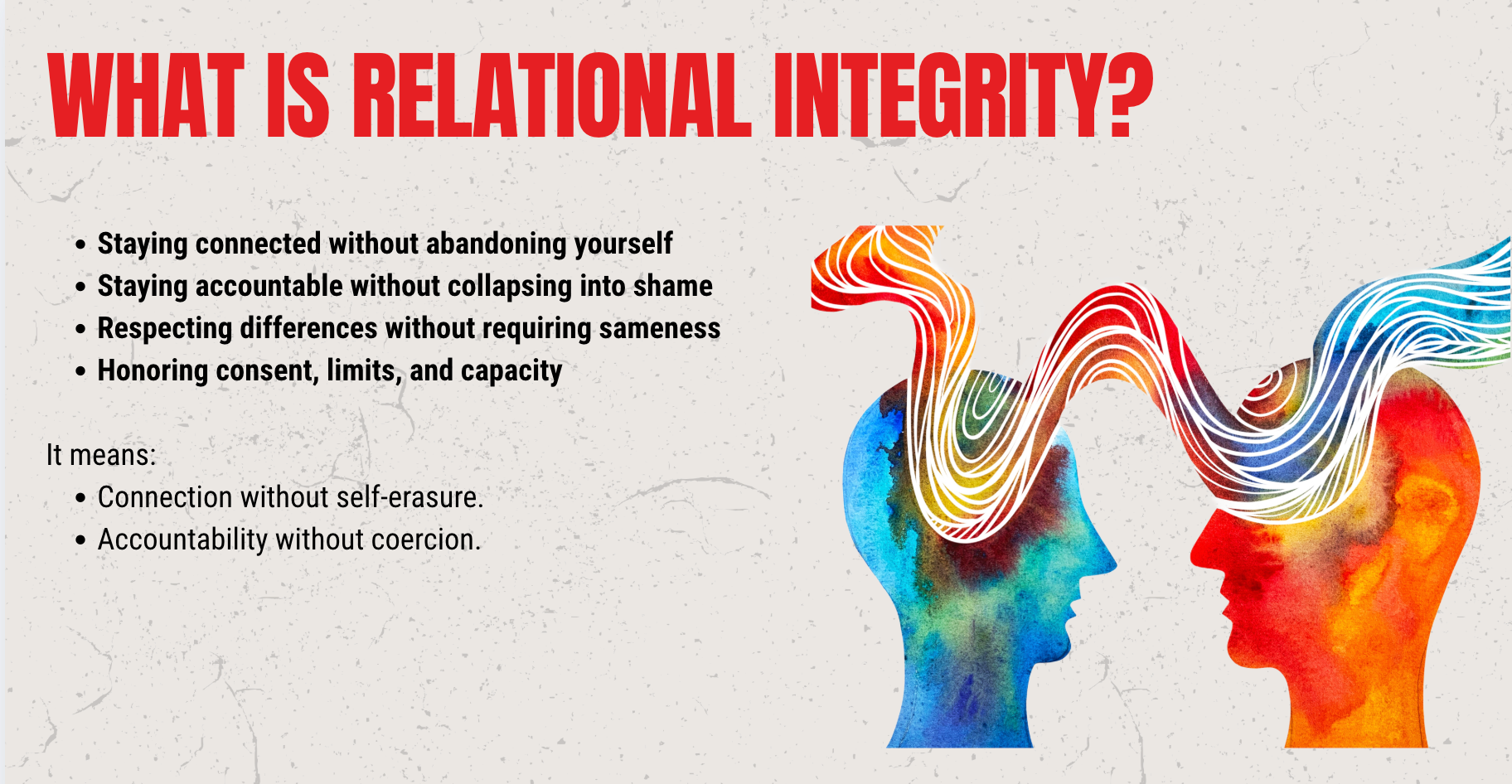
This workbook helps you recognize what each person is trying to protect, understand how those protective responses interact, and practice new ways of responding that support both connection and dignity.
Understanding the cycle is only the beginning.
Once you recognize the pattern, the next question becomes:
What does protection actually look like in everyday relationships?
Protection isn't just yelling or shutting down.
Sometimes it looks helpful.
Sometimes it even looks loving.
But when protection becomes the primary way we relate to one another, it often creates the very outcomes we're trying to avoid.
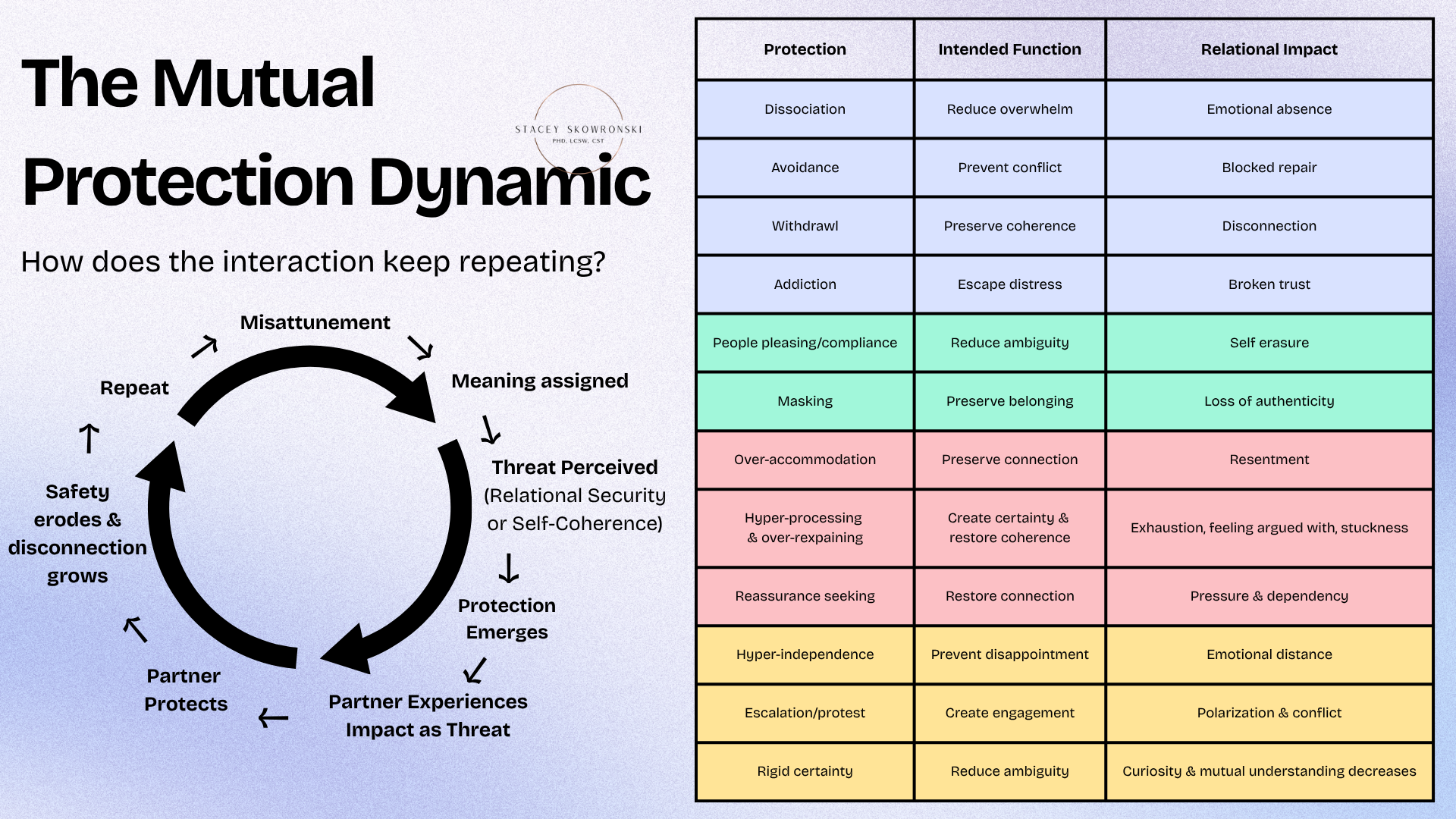
Protection isn't the problem.
Every protective response develops for a reason.
It is an attempt to preserve something important:
✅ Connection
✅ Understanding
✅ Autonomy
✅ Stability
✅ Fairness
✅ Personhood
The challenge is that strategies designed to protect us individually can unintentionally create distance, misunderstanding, or disconnection within the relationship.
This workbook helps you recognize these patterns with curiosity rather than blame, understand the needs beneath them, and practice responding in ways that support both connection and personhood.
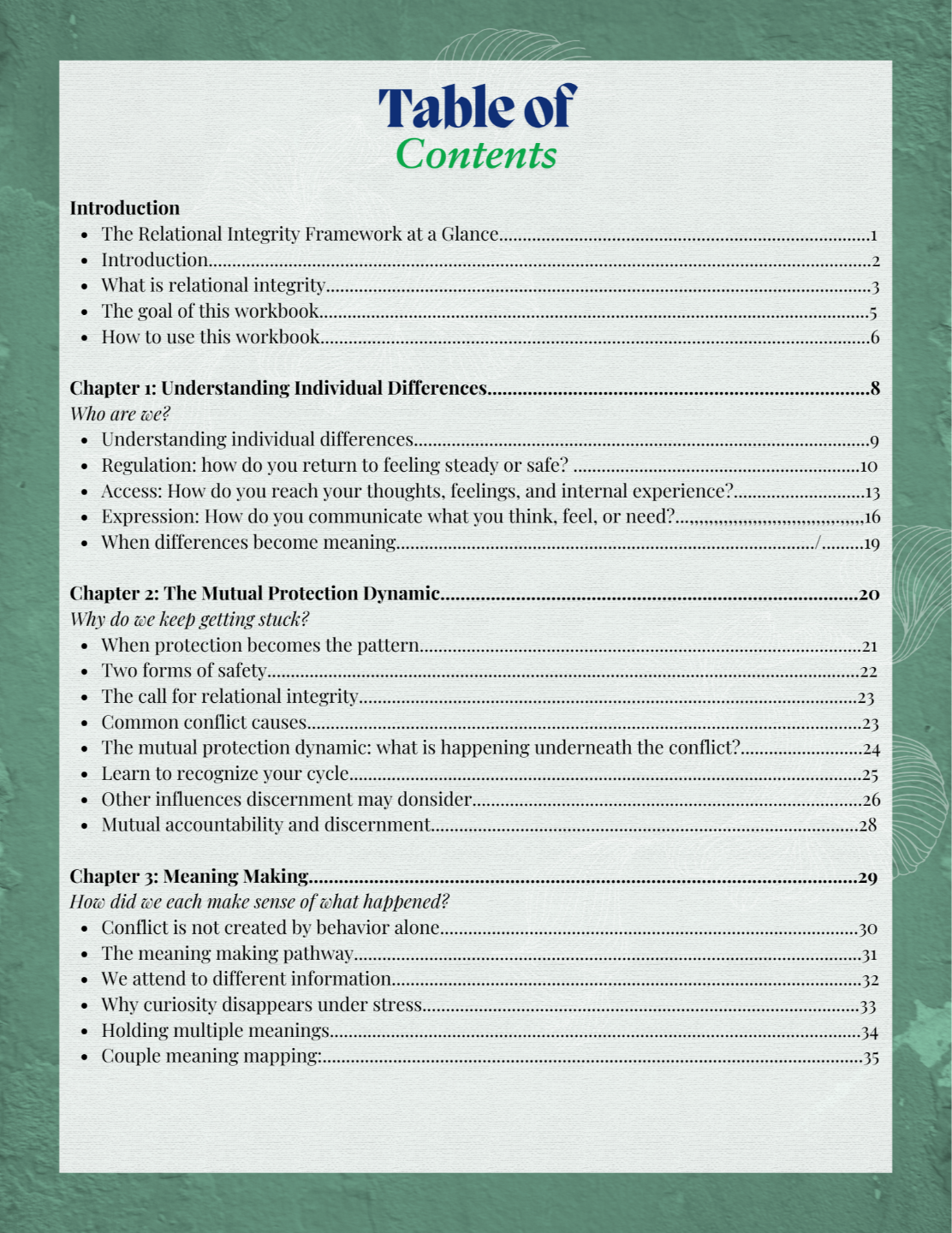
What's Included: Table of Contents
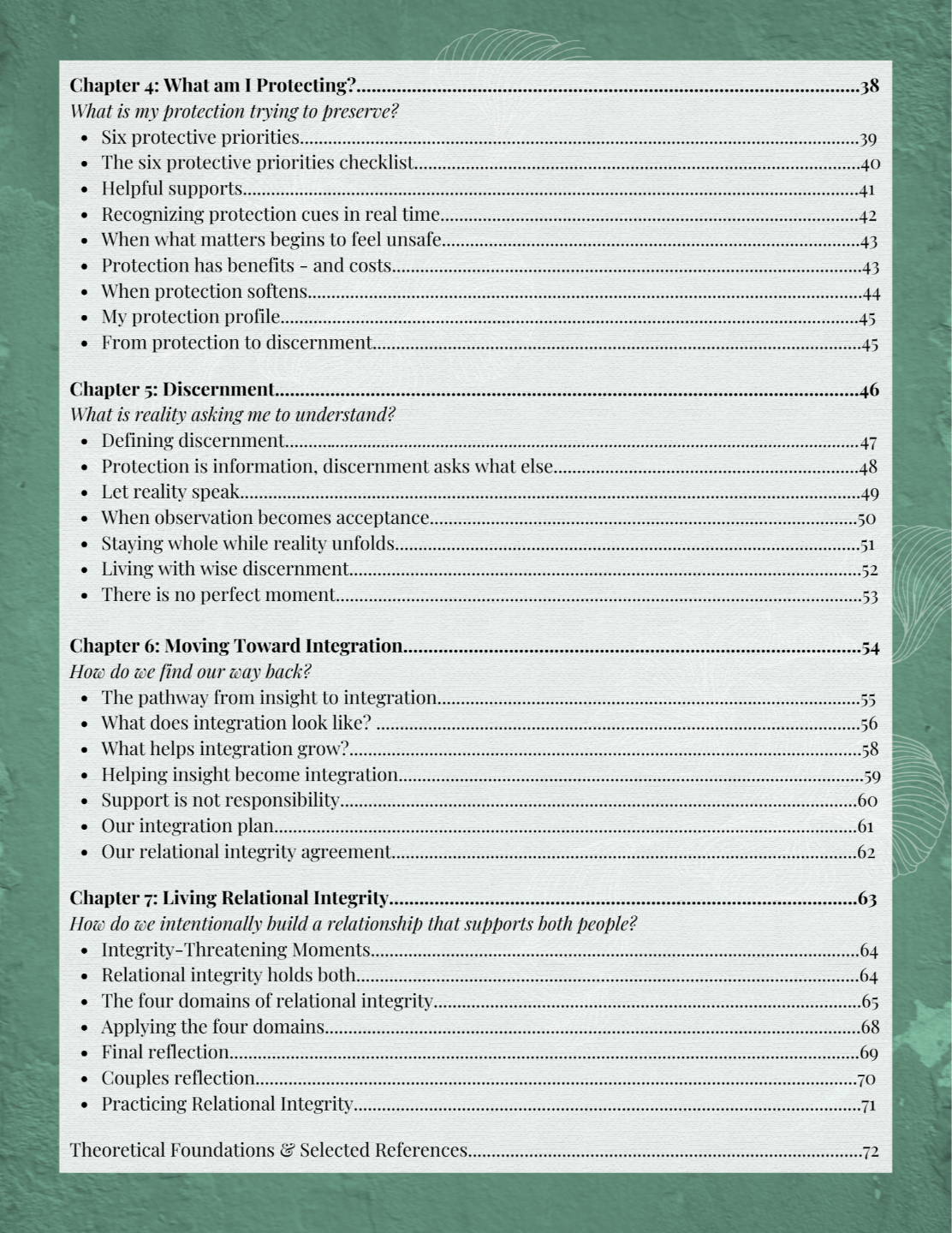
This workbook is ideal for:
✅ Couples who feel stuck in recurring conflict
✅ Neurodivergent couples
✅ Individuals seeking greater self-awareness in relationships
✅ Therapists looking for psychoeducational resources
✅ Couples working to rebuild trust, improve communication, and strengthen accountability
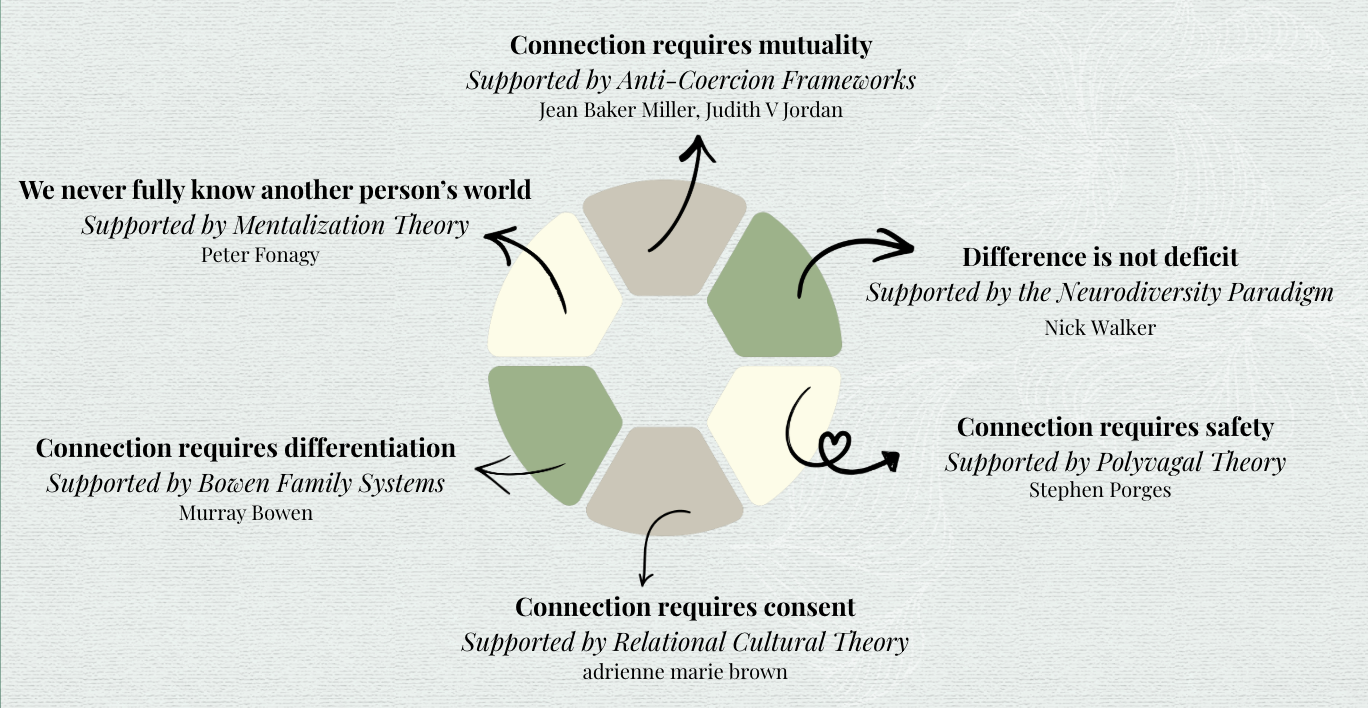
Foundations of the Framework:
The Developmental Pathway:

Neurodiversity-Affirming Statement
A Commitment to Neurodiversity-Affirming Care
This workbook is grounded in a neurodiversity-affirming perspective. It recognizes neurological differences - including autism, ADHD, learning differences, sensory differences, and other forms of neurodivergence - as natural variations of human experience rather than deficits to be corrected.
The goal of this workbook is not to encourage conformity or masking, but to support greater understanding, mutual accommodation, accountability, and relational integrity while honoring each person's dignity, autonomy, strengths, and authentic way of experiencing the world.
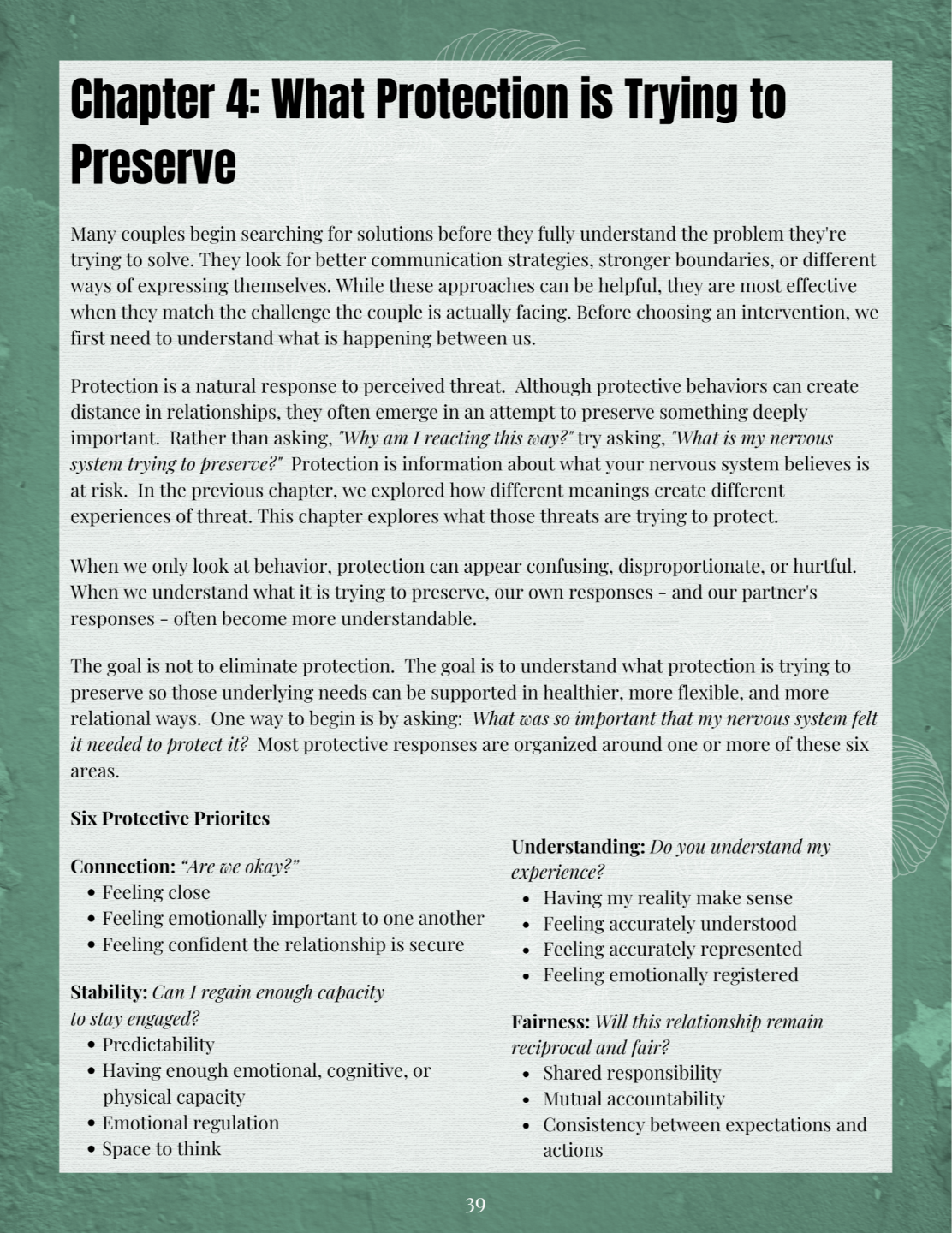
Beginning of Sample Chapter
Chapter 4: What Protection is Trying to Preserve
Learn to live with wise discernment
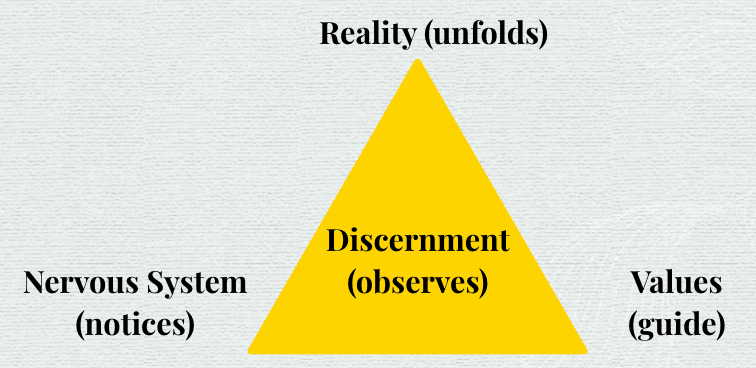
Discernment is the ability to stay connected to three sources of wisdom at the same time:
-
Your nervous system: What am I noticing?
-
Reality: What is actually happening over time?
-
Your values: Who do I want to be while this unfolds?
Relationships rarely become clear all at once. More often, clarity develops one observation at a time. One conversation. One repair. One disappointment. One act of accountability. One moment of courage. Discernment does not ask you to trust your fear or dismiss your fear. It asks you to trust your protector enough to listen, while trusting reality enough to keep learning.
Please note: This workbook assumes that meaningful relational growth requires mutual participation. While many of the concepts may be helpful for individuals reflecting on their own relationships, the framework is not intended to encourage readers to tolerate abuse, coercion, manipulation, or repeated violations of their physical or emotional safety. Healthy accountability includes respect for personal boundaries, consent, dignity, and individual well-being.
Disclaimers:
This workbook is intended for educational and informational purposes only. It is not a substitute for psychotherapy, medical care, mental health treatment, legal advice, or crisis intervention.
The exercises and concepts presented in this workbook are designed to promote reflection, learning, and relationship growth. They are not intended to diagnose, treat, cure, or prevent any mental health condition or relationship problem.
Every relationship is unique. Readers are encouraged to adapt the material to their own circumstances and seek guidance from a qualified mental health professional when additional support is needed.
If you are experiencing ongoing abuse, coercive control, domestic violence, suicidal thoughts, or another situation involving immediate safety concerns, this workbook is not a substitute for appropriate professional or emergency services. Your safety should always be the first priority.
Use of this workbook does not establish a therapist-client relationship with the author.