Welcome!
Focused educational experiences designed to explore specific topics related to neurodivergence, relationships, intimacy, identity, and connection.
Whether you're a clinician, relational guide, educator, individual, or couple, these trainings provide practical tools, insights, and neurodivergent-affirming frameworks that can be applied immediately in both personal and professional contexts.
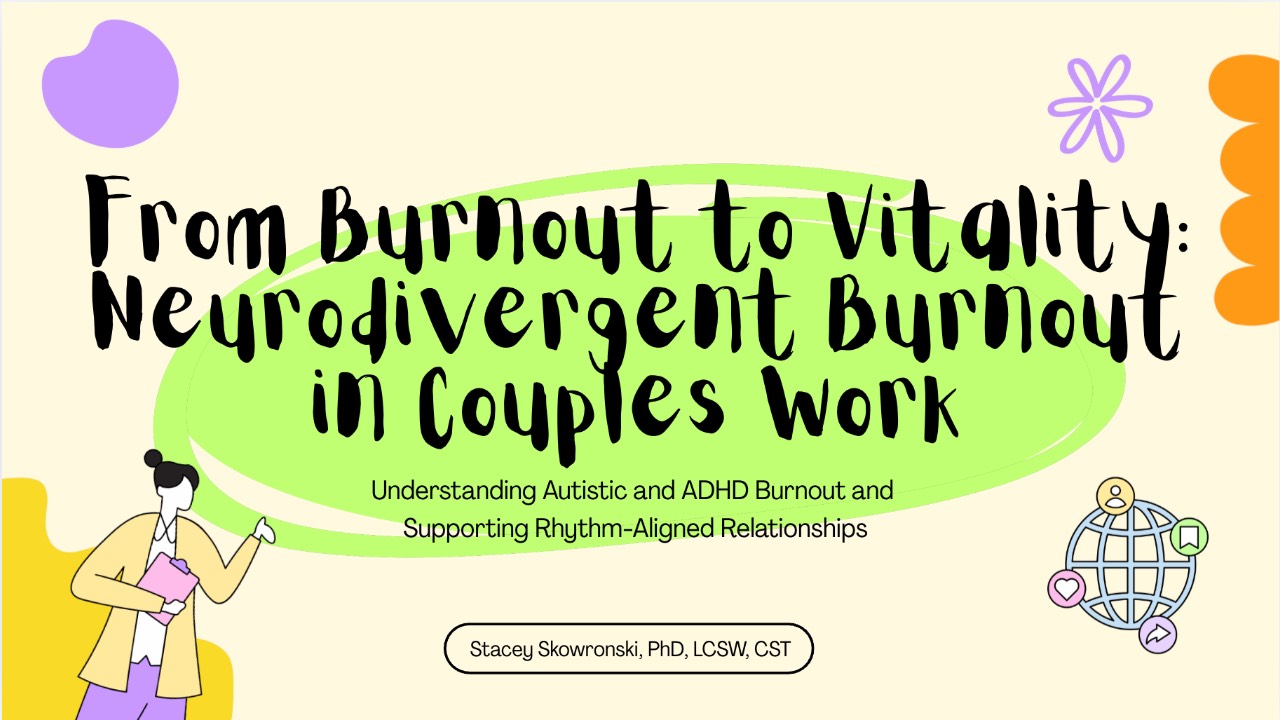
Neurodivergent Burnout in Couples Work
Understand how neurodivergent burnout impacts relationships, connection, communication, and capacity.
This training explores the signs, relational impacts, and common misunderstandings associated with burnout while offering practical approaches for supporting recovery, accommodation, and sustainable connection.
Unmasked: From Moral Injury to Self Alignment
Explore the impact of masking, chronic invalidation, and internalized expectations on neurodivergent well-being and identity.
This training examines how moral injury develops and offers pathways toward greater self-understanding, authenticity, self-trust, and alignment.
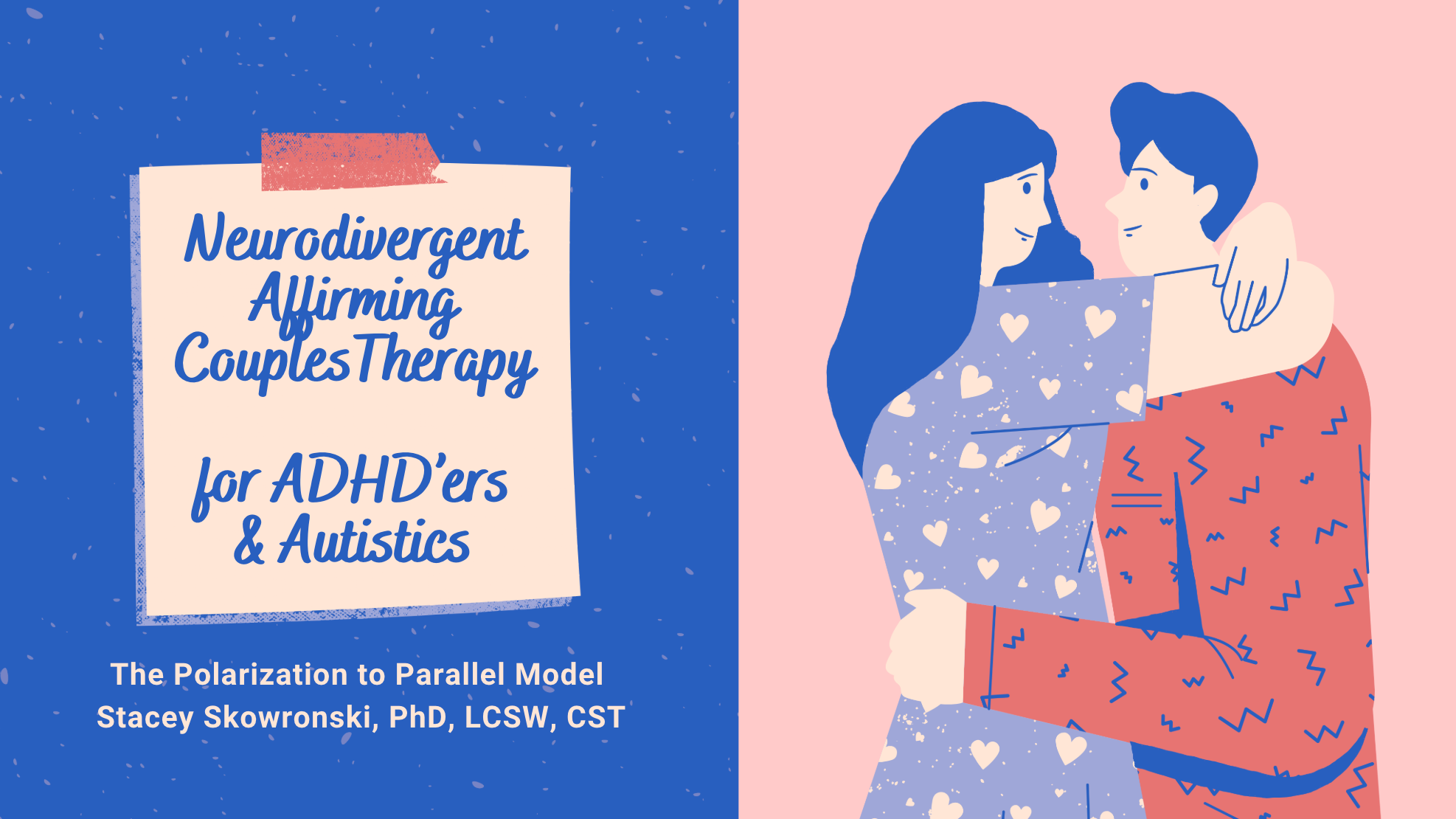
Neurodivergent Affirming Couples Therapy: The Polarization to Parallel Model
A foundational training for understanding how shame, invalidation, and misattunement contribute to relational distress.
Learn how neurodivergent couples can become polarized in conflict and explore affirming frameworks that help transform cycles of blame, protection, and rupture into greater understanding, accountability, collaboration, and repair.
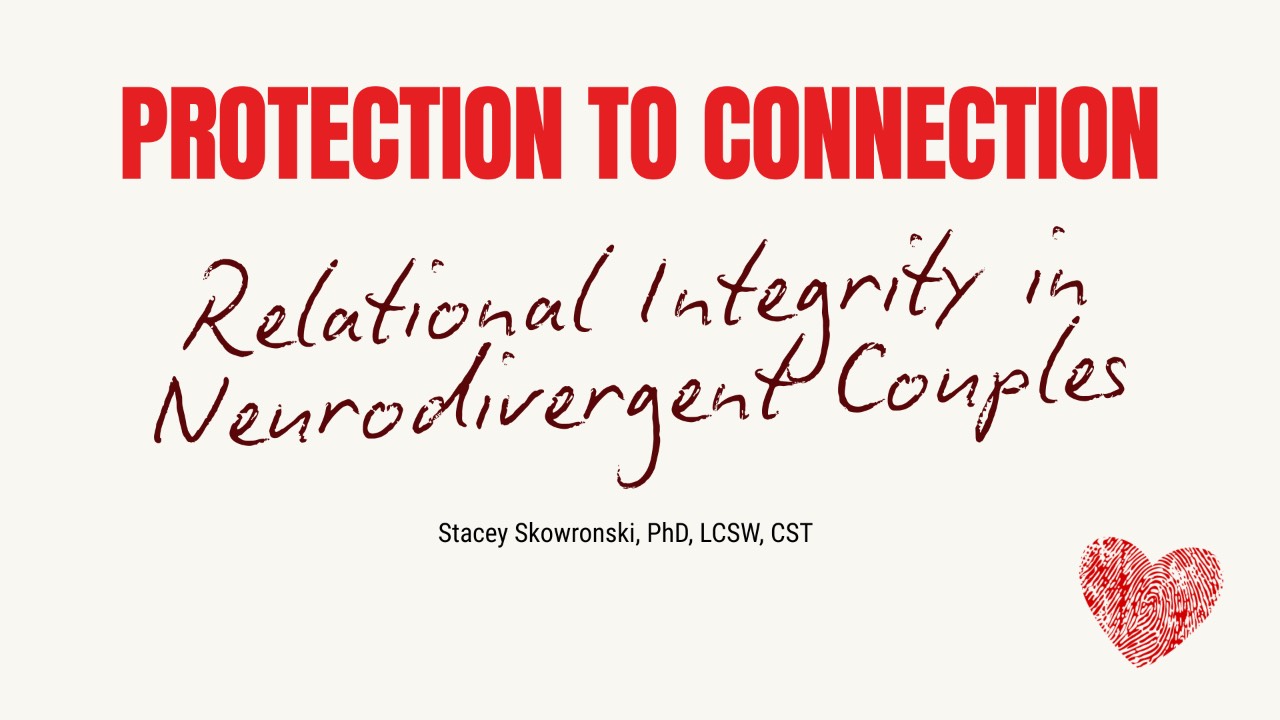
Protection to Connection
Learn how protective strategies develop within relationships and how they can influence communication, conflict, intimacy, and repair.
This advanced relationship training provides practical frameworks for understanding both identity and relational threats, and to how towards greater safety, trust, and connection through the lens of relational integrity.
Neurodivergent Intimacy Considerations
A rhythm-aware, neurodivergent-affirming approach to desire, intimacy, and connection.
This training explores how access, regulation, timing, sensory experiences, and relational rhythms influence intimacy, helping participants move beyond assumptions and toward greater understanding and coordination across difference.
Relational Integrity After Injury
This training explores the foundational capacities that make repair possible after relational injury, helping participants move beyond communication strategies alone to understand how dignity, presence, reflection, perspective taking, accountability, repair, mutual influence, and integration support sustainable connection - while honoring different pathways to coherence and connection.