Relational Integrity After Injury
A Neurodivergent-Affirming Framework for Understanding Protection, Capacity, and Repair in Relationships
A 2-hour on-demand training for therapists and relationship professionals
Many couples don't struggle because one partner doesn't care enough, communicate well enough, or try hard enough.
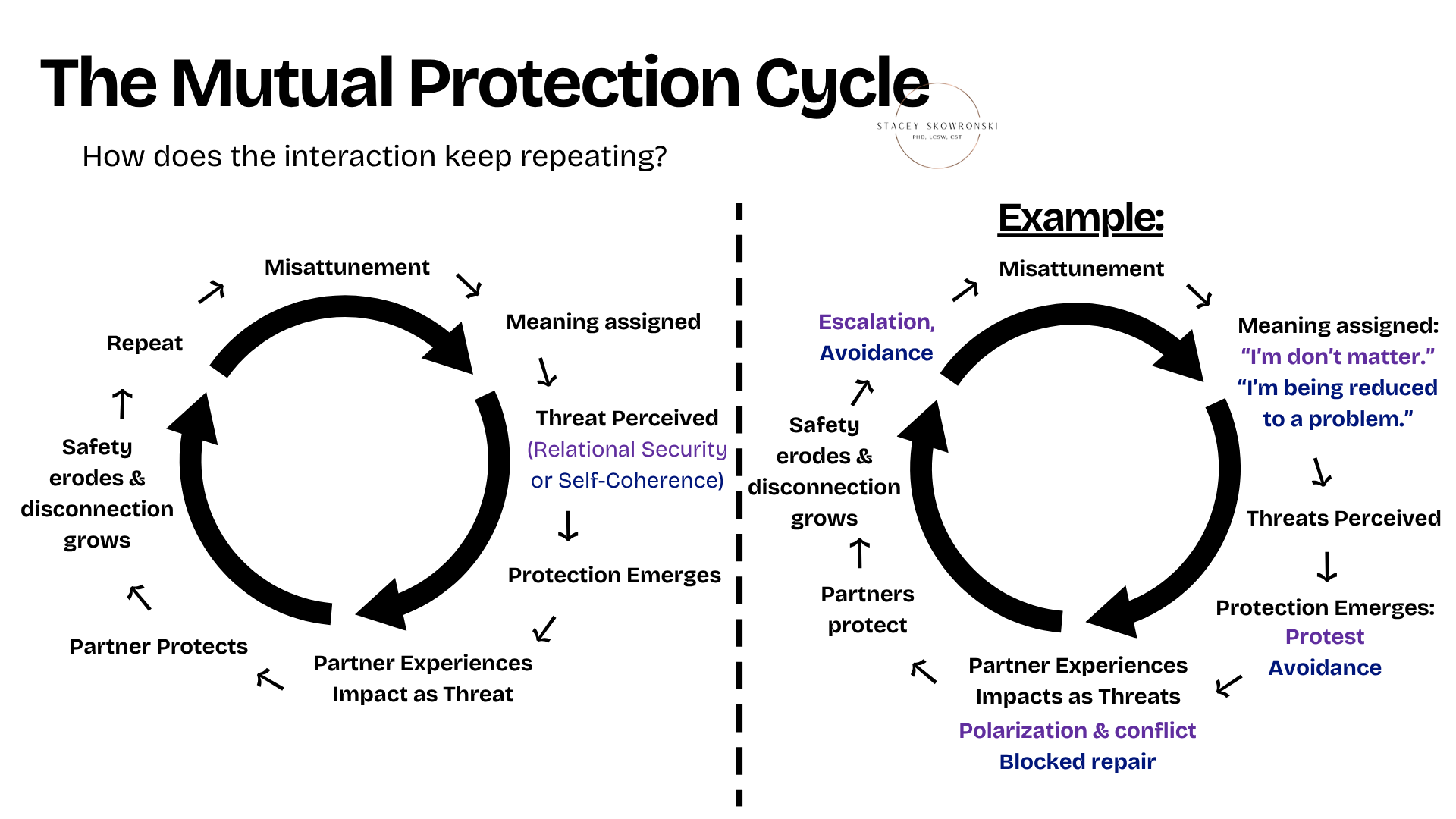
They struggle because two people are protecting something important, and their ways of protecting it begin to collide.
✅ A need for space meets a need for connection.
✅ Withdrawal meets pursuit.
✅ Directness meets diplomacy.
✅ Explanation is heard as defensiveness.
✅ Impact is heard as condemnation.
✅ Accommodation becomes self-erasure.
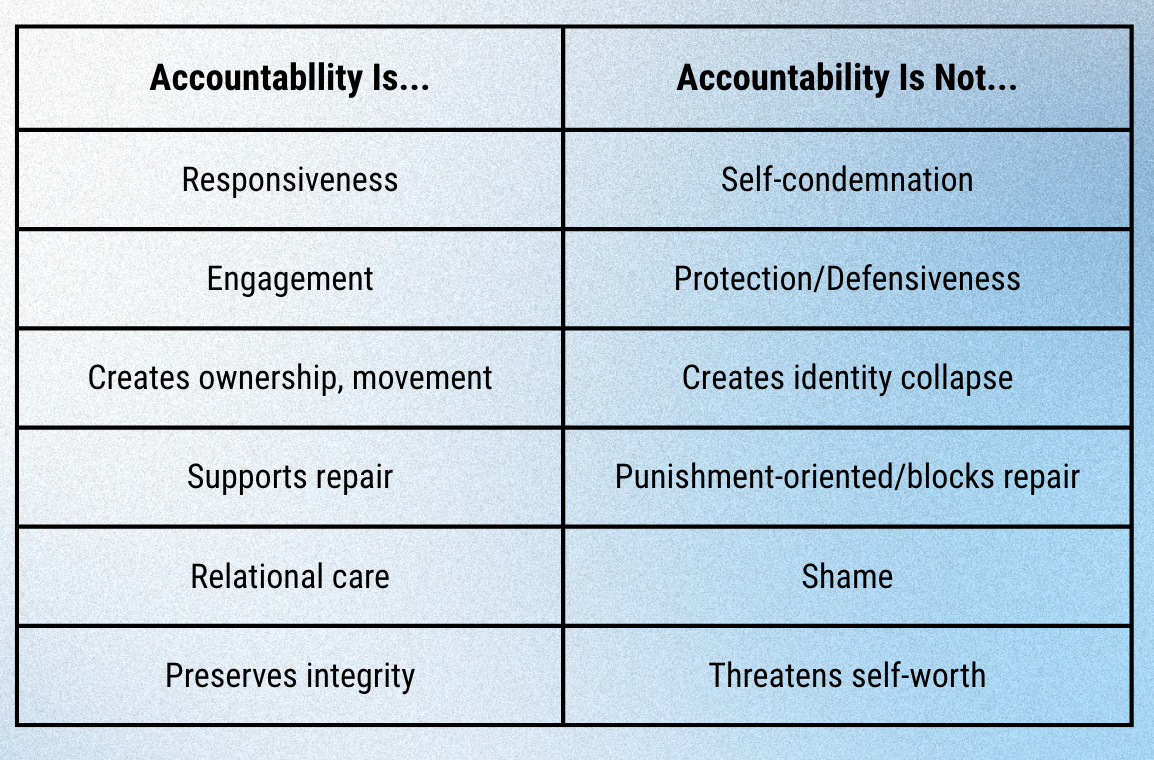
✅ Accountability becomes shame.
Training only
$97
Top features
-
2 hour training, with downloadable handouts and slides
- 2 AASECT Continuing Education Credits
- Foundations of Repair packet to share with clients
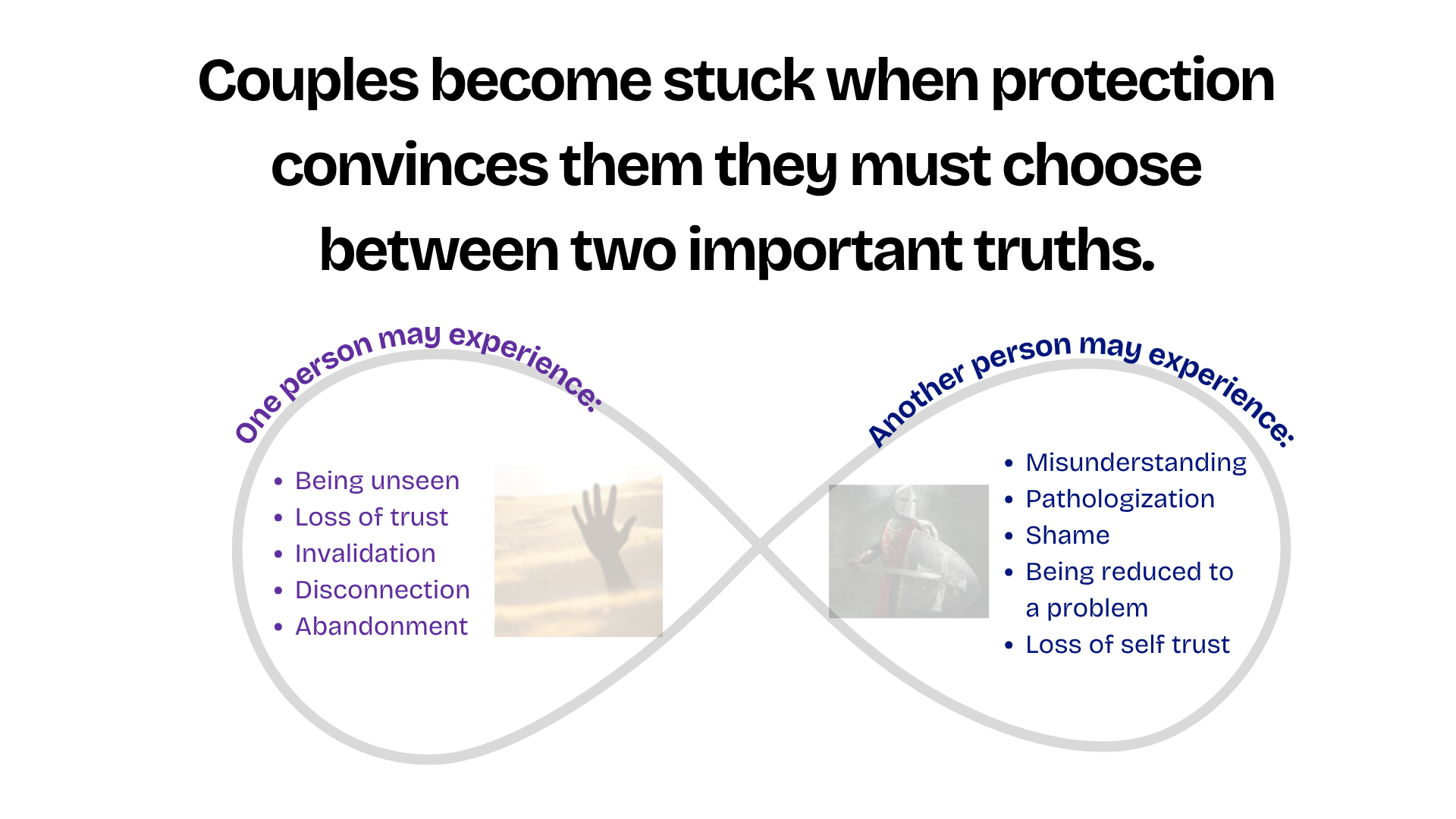
And before long, both people are working harder and feeling less understood.
Relational Integrity offers another way to understand what is happening.
Rather than deciding who is right, who is avoidant, who is too sensitive, who needs to communicate differently, or which partner needs to change, this training helps you ask:
👉 What is each person protecting?
👉🏽 What capacity is missing or overloaded?
👉🏿 What does this relationship need now?
What if the problem isn't the protection?
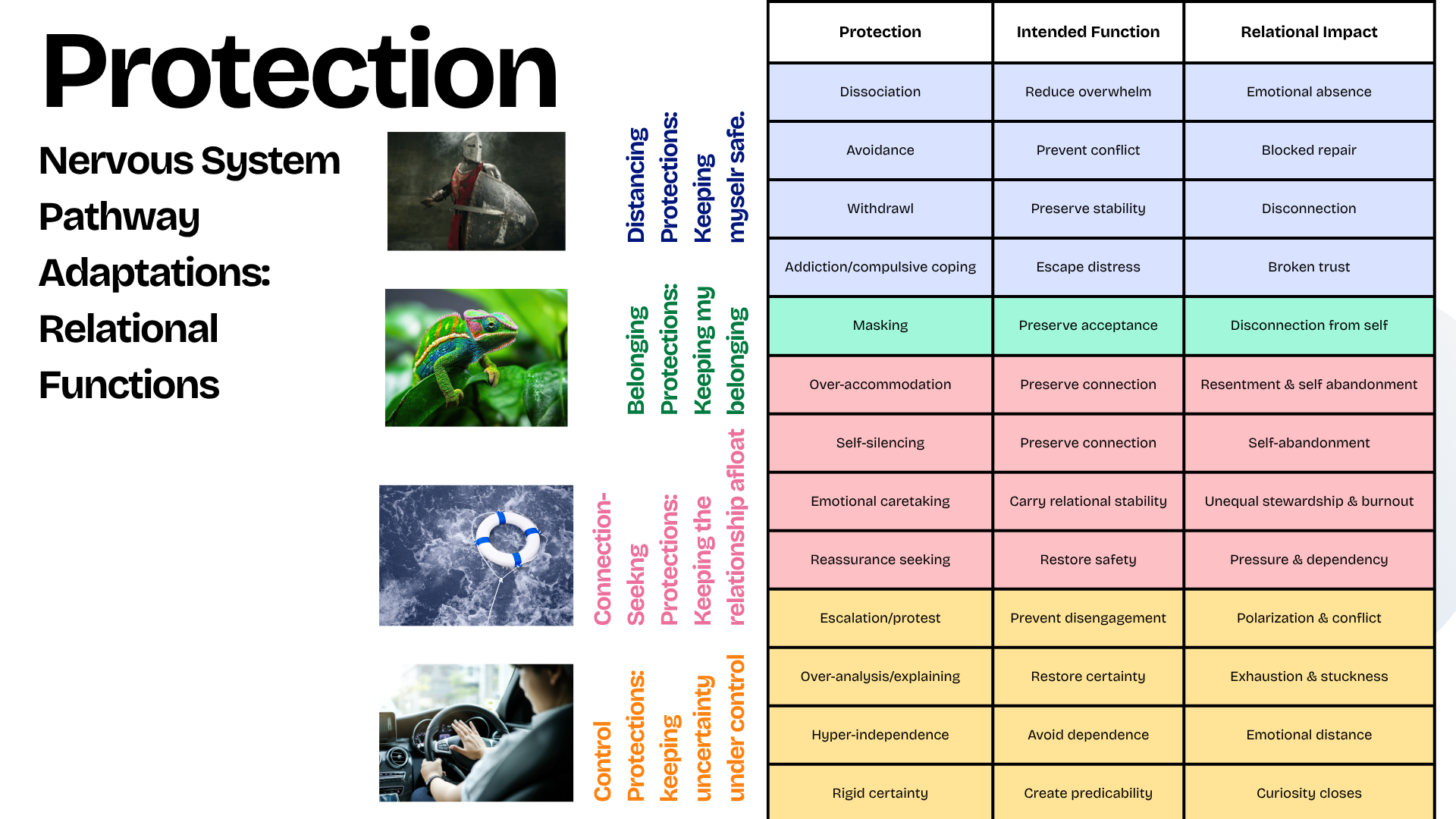
Many relationship behaviors that eventually cause harm began as intelligent attempts to preserve something important: safety, dignity, connection, predictability, autonomy, belonging, coherence, or emotional stability.
✅ Avoidance may reduce overwhelm.
✅ Accommodation may preserve connection.
✅ Certainty may create predictability.
✅ Masking may protect belonging.
✅ Escalation may attempt to prevent disconnection.
✅ Withdrawal may preserve stability when continued engagement exceeds capacity.
The goal isn't simply to eliminate these responses.
The goal is to develop enough individual and relational capacity that protection is no longer the only available option.
That is the shift from mutual protection to relational integrity.
What is Relational Integrity?
Relational integrity is the practice of staying aligned with your values, capacity, and consent while engaging with others -- without requiring sameness, and without using pressure, performance, or self-erasure to maintain connection. It means:
✅ You don't abandon yourself to keep the relationship.
✅ You don't override another person to stabilize it.
✅ You remain accountable to impact while being honest about limits.
Healthy relationships are not relationships without difference, distress, protection, or rupture. They are relationships that develop enough capacity to hold more reality without requiring either person to disappear.
In this training, you'll learn to recognize the capacities underneath repair:
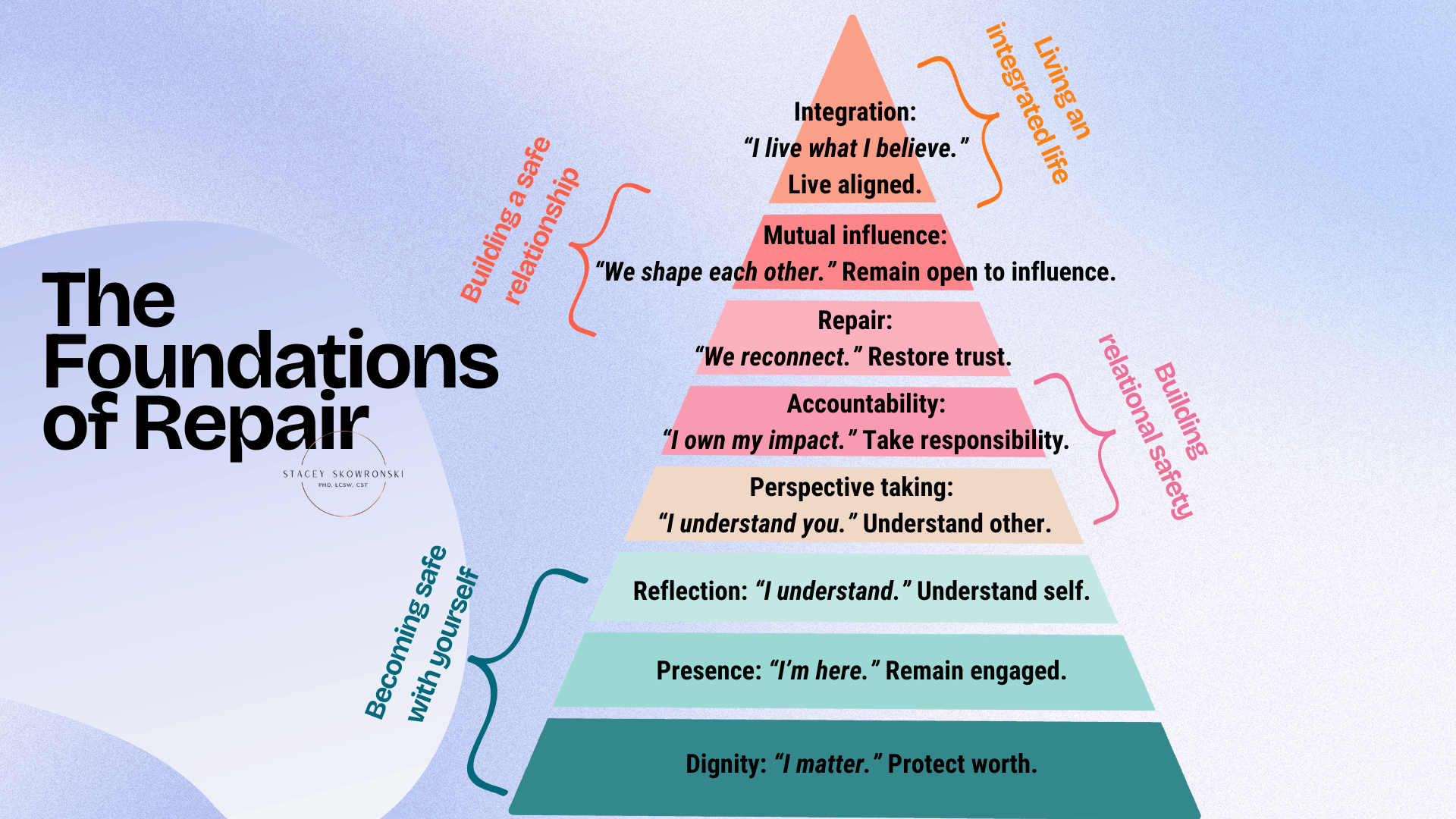
Rather than prescribing a single "healthy" way to communicate or relate, the Relational Integrity Framework identifies eight capacities that support connection while protecting both people.
✅ Dignity: can I protect both my and another person's humanity?
✅ Presence: can I remain emotionally available when emotions become difficult?
✅ Reflection: can I examine my own experience with curiosity?
✅ Perspective Taking: can I understand another person's experience without abandoning my own?
✅ Accountability: can I acknowledge impact without losing my worth or another person's dignity?
✅ Repair: can I translate understanding into behaviors that restore trust?
✅ Mutual Influence: can I remain open to being changed by another person's experience?
✅ Integration: can my values, relationships, and actions become increasingly aligned?
These capacities are not personality traits or measures of who is “healthier.”They can look different across people, nervous systems, cultures, communication styles, neurotypes, histories, and circumstances.
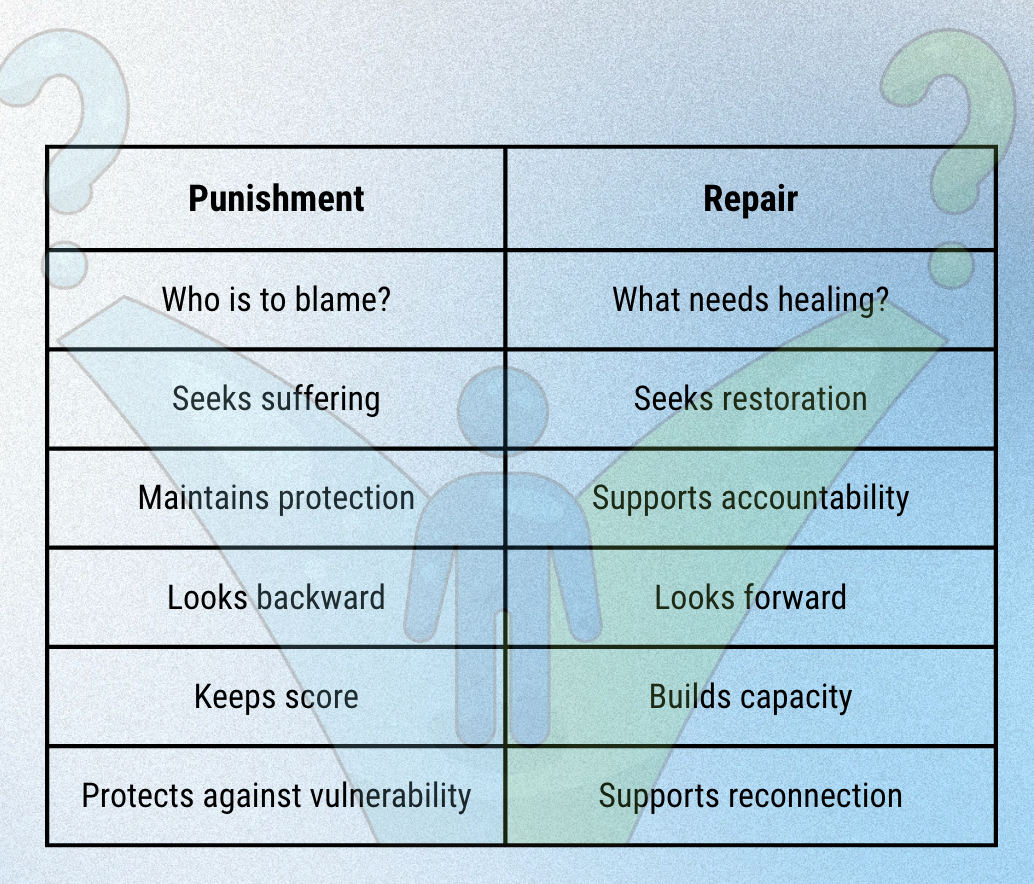
Accountability ≠ Shame, and Repair ≠ Punishment
When trust is damaged, people can understandably become focused on determining responsibility. But suffering is not the same thing as repair.
Understanding impact without context can become punishment.
Understanding context without impact can become invalidation.
Relational Integrity separates accountability from condemnation and repair from punishment.
You'll learn why protection can become relational injury
This training shows you how to hold context and impact simultaneously - without collapsing into either blame or excuse. You'll learn to distinguish:
✅ Reason ≠ Excuse
✅ Meaning well ≠ Landing well
✅ Context ≠ Impact
✅ Accountability ≠ Shame
✅ Repair ≠ Punishment
✅ Connection ≠ Self-abandonment
✅ Boundaries ≠ Rejection
Because relational integrity requires enough complexity to hold more than one truth at a time.
You'll also learn tools to support couples in cultivating more affirming relationships
Individual Readiness Windows:
✅ Increase capacity by designing affirming environments
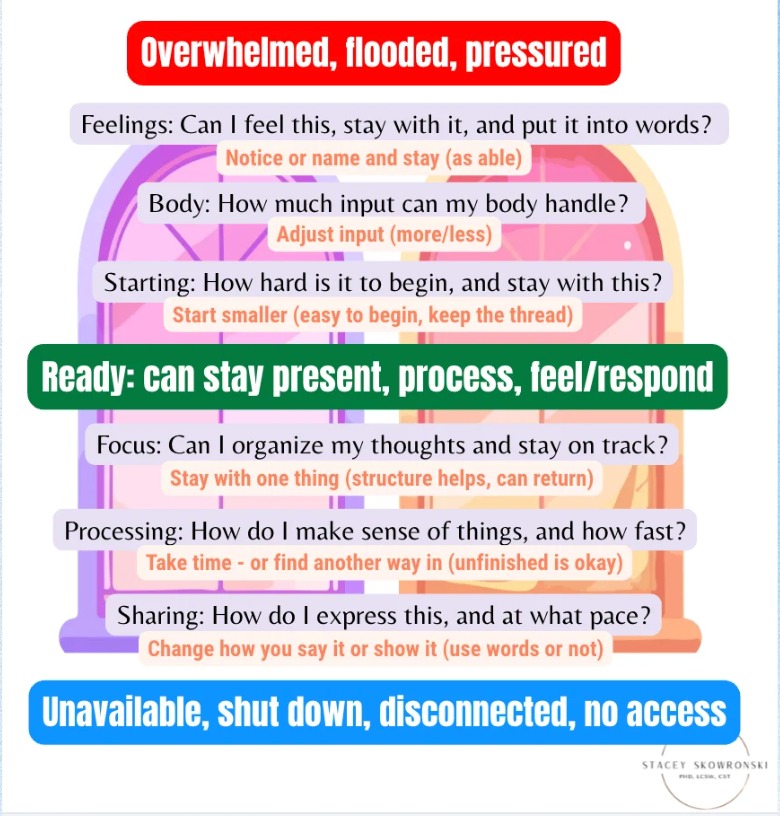
Shared Stewardship Windows:
✅ Increase reciprocity by designing affirming relational environments
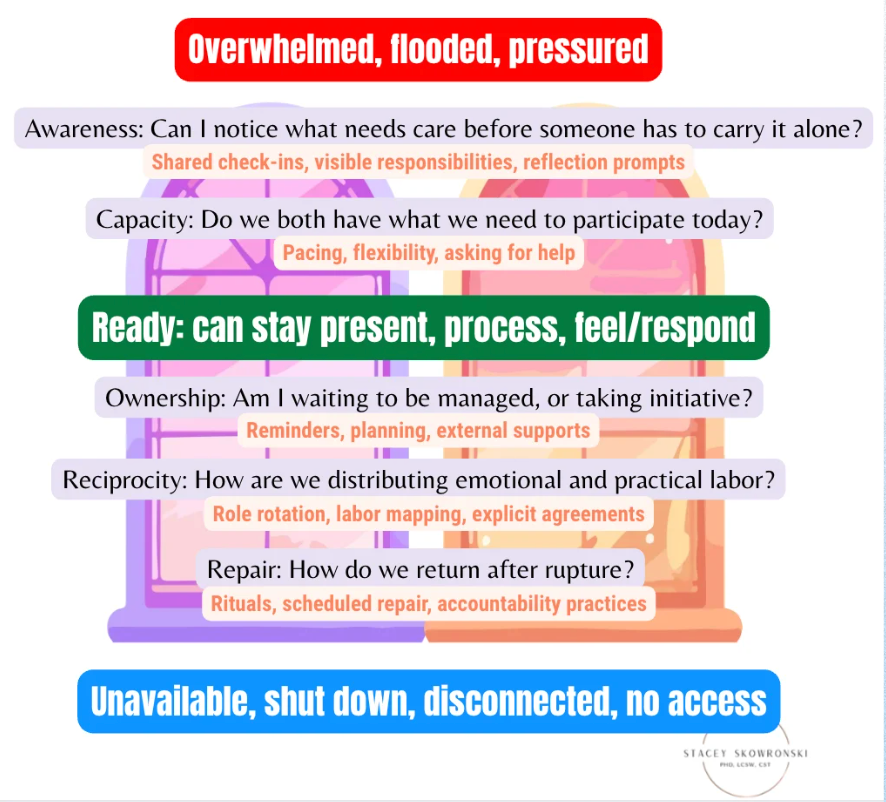
The framework helps you move from:
“Who needs to change?” to: “What kind of relational challenge are we actually facing?”
Because different challenges require different responses.
Difference → understanding and accommodation
Capacity → regulation, pacing, and support
Harm → accountability and repair
Ongoing patterns → boundaries and decisions
Discernment means knowing what the relationship needs most, and in what order.
You'll leave with a different way to understand stuck couples
Instead of seeing:
-
“avoidant,”
-
“needy,”
-
“defensive,”
-
“controlling,"
-
“overly emotional,”
-
“rigid,”
-
“codependent,”
-
“bad at communication”
you'll have a framework for asking:
-
What function is this response serving?
-
What is this person trying to protect?
-
What capacity is unavailable under these conditions?
-
What meaning has each person made?
-
What would preserve dignity while still responding honestly to impact?
-
What would make a different response possible?
That shift changes the intervention.
Because healthy does not have to mean identical
Difference is not deficit.
-
Presence may be visible or subtle.
-
Reflection may happen privately or through conversation.
-
Perspective taking may begin intuitively or through explicit explanation.
-
Dignity may be communicated through directness or diplomacy.
-
Mutual influence may result in changing a position - or in thoughtfully maintaining one.
-
Repair may begin quickly or require time to regulate and process.
Different pathways can support the same relational capacity.
This training may be especially useful if you work with…
✅ neurodivergent couples
✅ mixed-neurotype relationships
✅ couples caught in pursuit/withdrawal or mutual-protection cycles
✅ clients with trauma histories
✅ partners with very different communication or processing styles
✅ couples navigating burnout or fluctuating capacity
✅ relationships where accountability quickly becomes shame or defensiveness
✅ partners who love one another but repeatedly misinterpret difference as lack of care
It is also designed for clinicians who want to practice in a way that is neurodivergent-affirming without abandoning accountability, impact, boundaries, or repair.
A framework for complexity -- not another relationship rulebook
Relational Integrity does not ask couples to become identical communicators.
-
It does not assume that eye contact means presence.
-
That immediate processing means engagement.
-
That needing space means avoidance.
-
That wanting reassurance means dependency.
-
That directness means disrespect.
-
That accommodation means self-abandonment.
-
That intuitive empathy is superior to explicit communication.
-
Or that staying together is always the measure of relational success.
Instead, it asks clinicians to look at function, capacity, context, impact, and the relationship between them.
This training is for you if…
You've ever thought:
-
“I understand why they're doing this, but I don't know how to address the harm.”
-
“Both partners have valid needs, and I don't want to make one person's nervous system the standard for the relationship.”
-
“Traditional couples advice seems to pathologize the exact differences I'm trying to affirm.”
-
“I don't want neurodivergent affirmation to become an excuse for relational harm.”
-
“I need language for accountability that doesn't collapse into shame.”
-
“I can see the protective cycle, but I'm not always sure what capacity I'm trying to build.”
This training was built for that clinical space.
About the Framework
The Relational Integrity Framework™ is an original integrative clinical model developed by Stacey Skowronski, PhD, LCSW, CST.
It is informed by established research and theory in attachment, interpersonal neurobiology, trauma, neurodiversity, systems theory, relationship science, mentalization, self-determination, and restorative practice.
Its organization, terminology, conceptual architecture, and clinical applications represent an original integrative synthesis.
Complete references and recommended readings are included in the accompanying materials.
The goal isn't to eliminate protection.
It's to build enough capacity that protection is no longer the only option.
Learn to recognize what couples are protecting, understand what capacity is needed, and support connection without requiring either person to disappear.
Relational Integrity
A 2-Hour On-Demand Clinical Training
$97
Disclaimers:
Relational Integrity After Injury is an educational and reflective training intended for professional learning and development. The concepts, frameworks, examples, and exercises presented are designed to support reflection, clinical thinking, and a more nuanced understanding of relational injury, accountability, repair, and relational integrity. They are not psychotherapy, clinical supervision, diagnosis, treatment, legal or ethical advice, or a substitute for individualized mental health care.
Participation in this training does not establish a therapist-client, supervisor-supervisee, or other professional relationship with the presenter or author. Professionals are responsible for exercising their own clinical judgment and applying these materials within the scope of their education, competence, licensure, professional ethics, and applicable laws.
Every relationship and relational injury is different. The concepts presented here are not intended to determine who is “right,” assign responsibility without individualized assessment, prescribe whether a relationship should continue, or guarantee repair or reconciliation. Understanding the context, function, capacity, or protective purpose surrounding a behavior does not negate its impact, remove responsibility for harm, or require another person to tolerate it.
This training is not intended to assess or intervene in situations involving abuse, coercive control, domestic violence, suicidality, or other immediate safety concerns. These situations may require specialized assessment, individualized support, crisis resources, or emergency services beyond the scope of this training.
Repair is not always possible, appropriate, or desired, and relational integrity does not require reconciliation or continued relationship.