From Protection to Connection: Relational Integrity in Neurodivergent Couples
An Affirming Framework for Couples Therapy
1.5 AASECT continuing education credits included
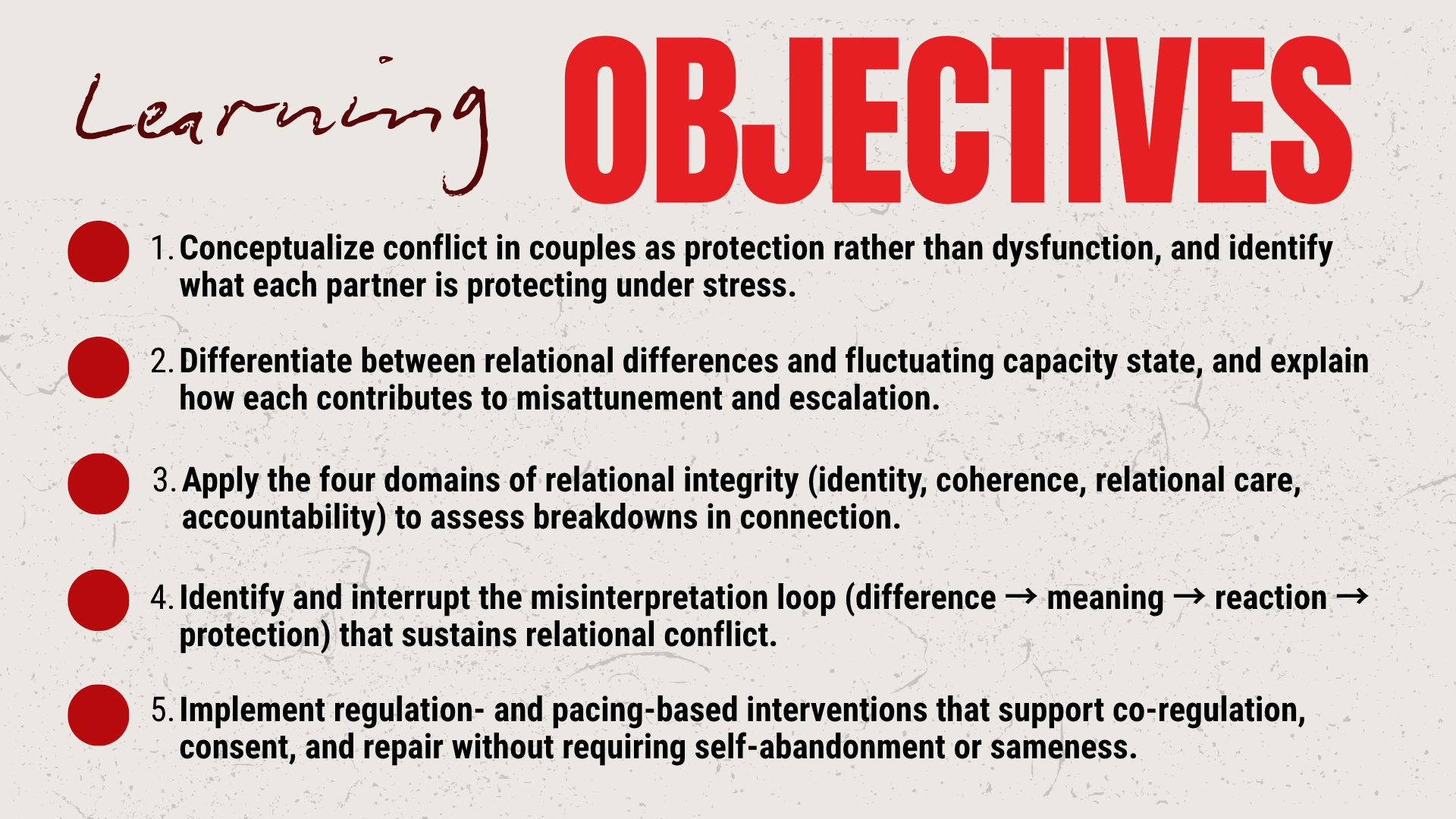
Learn how to identify what’s actually happening in moments of conflict - and respond in a way that supports regulation, connection, and repair without forcing sameness or self-abandonment.
Training only
$69
Top features
-
90-minute training, with downloadable handouts and slides
- 1.5 AASECT Continuing Education Credits

Training + Relational Integrity Card Deck (Personal Use)
$139
Top features
- 90-minute training with downloadable handouts and slides
- 1.5 AASECT Continuing Education Credits
-
Digital PDF card deck (240 cards) designed for home/professional printing
-
Cards are for personal-use only (non-transferable)

Training + Relational Integrity Card Deck (Professional License)
$199
Top features
-
90-minute training with downloadable handouts and slides
- 1.5 AASECT Continuing Education Credits
-
Digital PDF card deck (240 cards) designed for home/professional printing.
-
Professional PDF license grants permission to use with clients
Couples don’t struggle because one person is “too much” or the other is “not enough.” They struggle because:
✅ their nervous systems are responding differently at the same time
✅ their needs for connection and safety come online in different ways
✅ and their protective responses get misread by each other
👉 Both people are protecting something important.
👉 And both can feel misunderstood at the same time.
What Makes this Different:
This model does not assign a “problem partner.” Instead, it helps you understand:
✅ how each person’s strengths can become stress points under pressure
✅ how each partner's protective strategies interact and escalate
✅ how misalignment - not dysfunction - drives escalation
✅ how both partners contribute to and can repair the dynamic
What this Training Teaches:
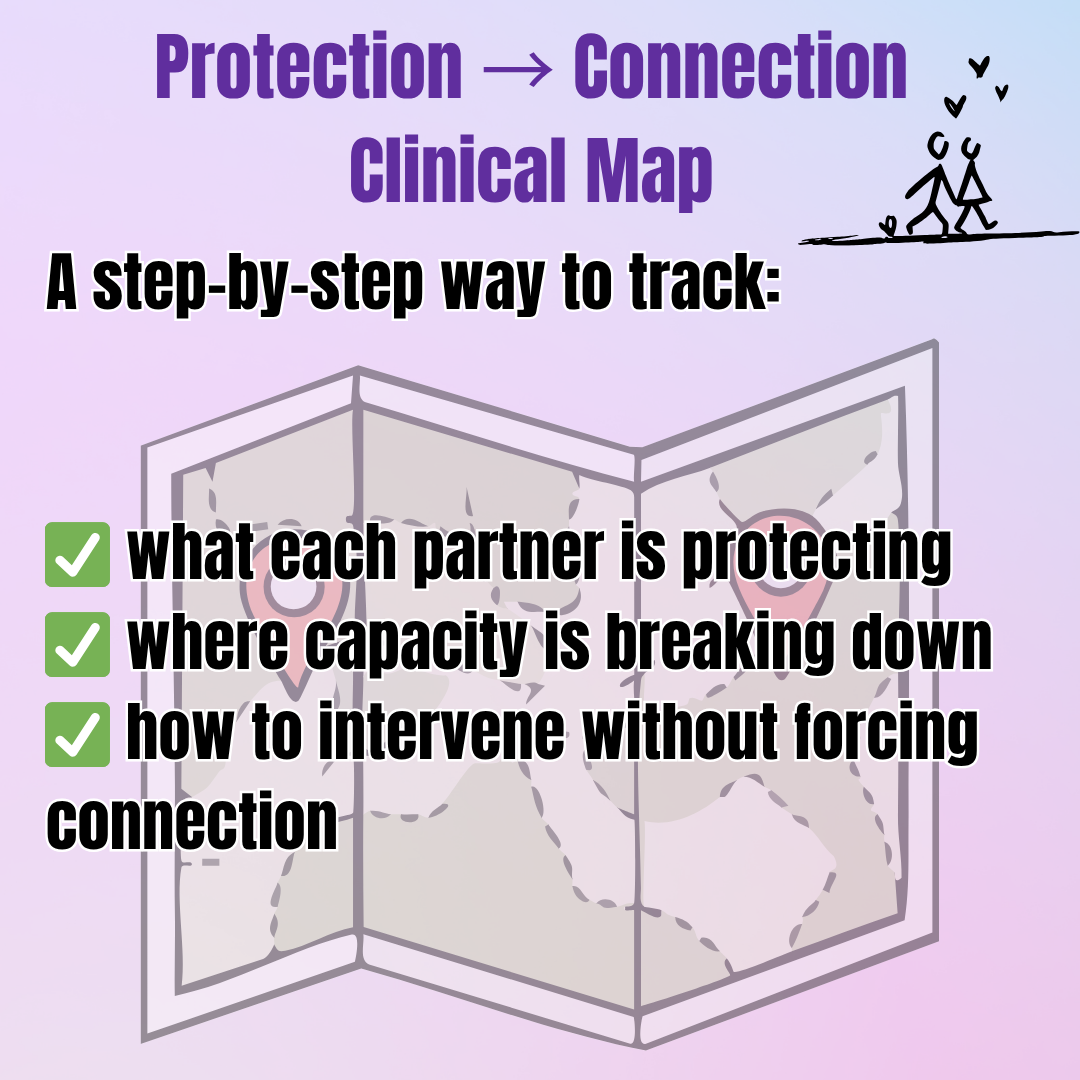
✅ Track both partners simultaneously, not just individual behavior
✅ Understand how each person's protection impacts the other
✅ Support connection without requiring either person to override their needs
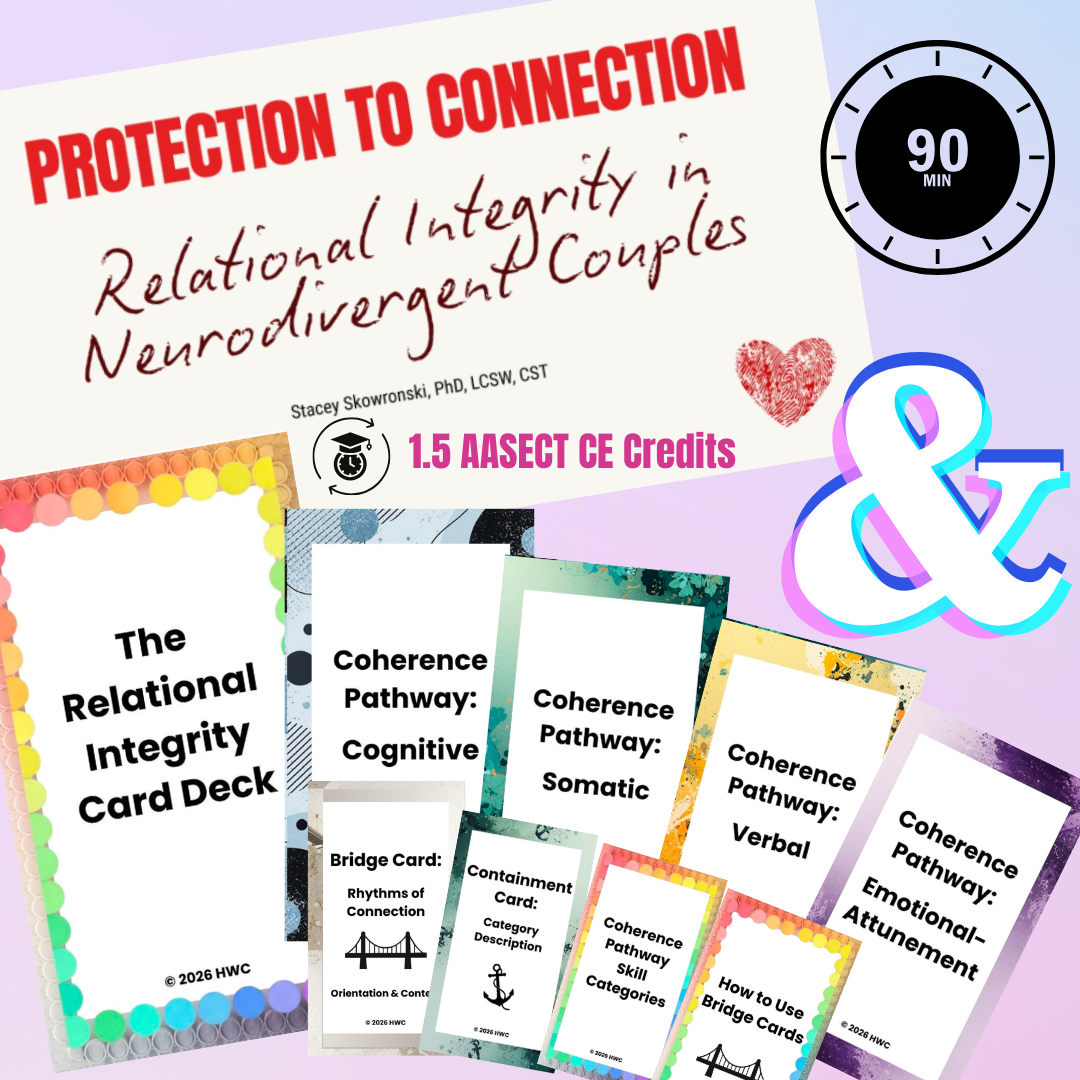
Add the Relational Integrity Card Deck:
The cards are designed to:
✅ support both partners in real time
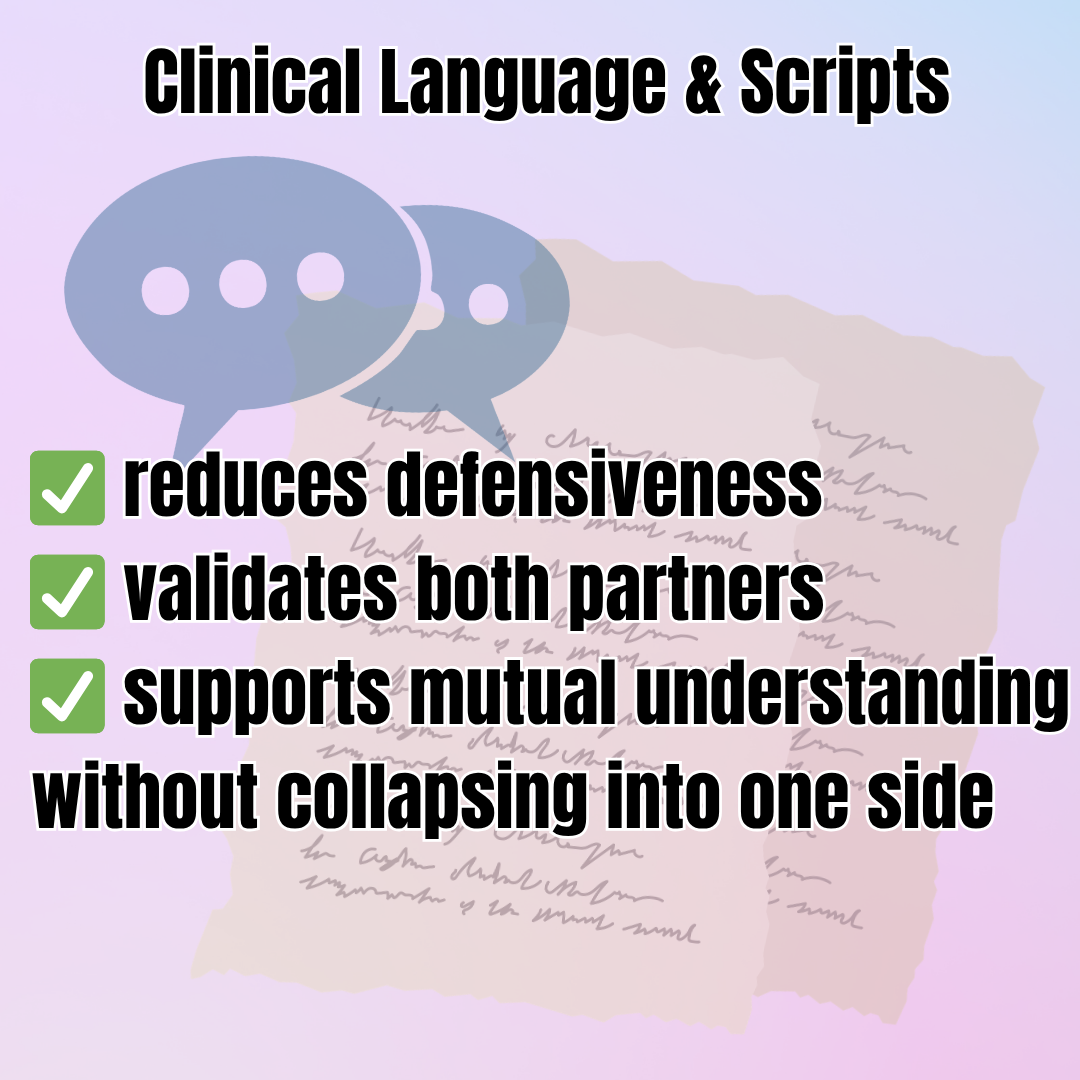
✅ help each person communicate their internal state without blame
✅ guide shared understanding - not correction
Why Mutuality Matters:
In many models, one partner is positioned as avoidant, anxious, reactive, or resistant.
But in reality:
✅ both partners are adapting
✅ both are protecting something meaningful
✅ and both are impacted by the interaction

This framework helps you:
✅ hold both perspectives at once
✅ reduce blame and polarization
✅ and build connection that doesn’t require either person to self-abandon
Both people can be overwhelmed.
Both people can be trying.
And both people can need something different at the same time.
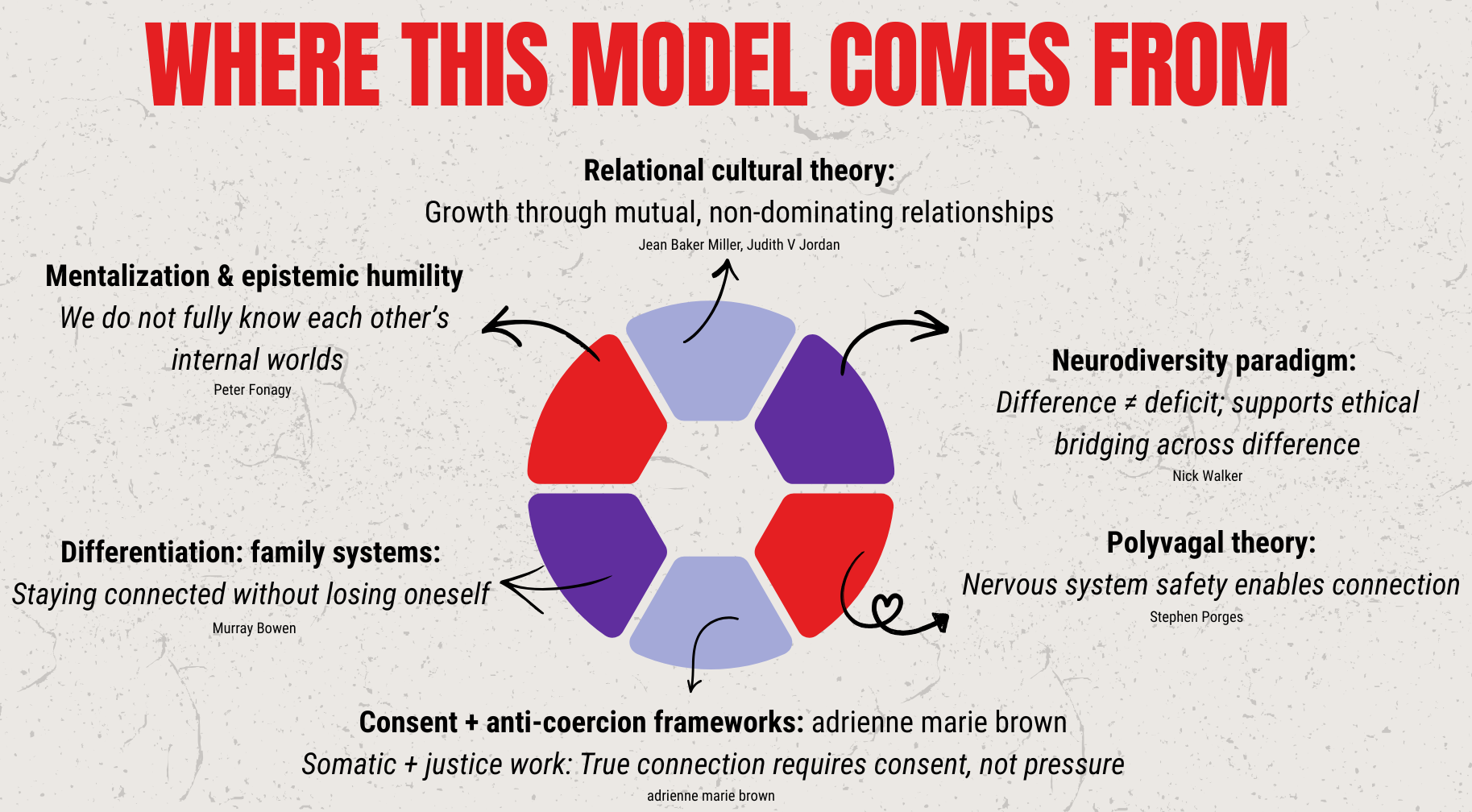
This presentation builds on these four presentations:
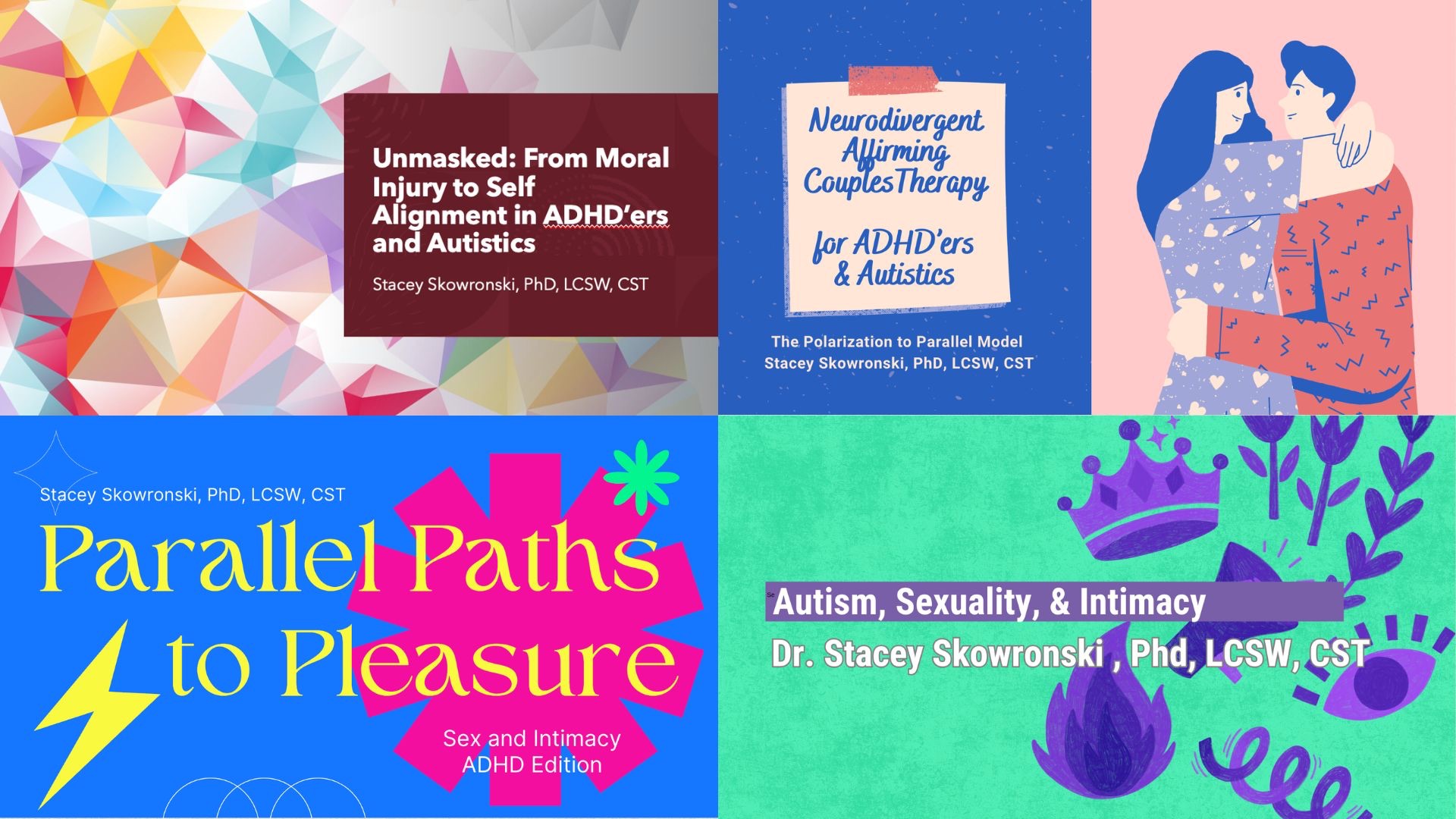
Dr. Stacey has incorporated variations of these presentations recently at the following professional trainings and speaking events:
- Skowronski, S. (2025-2026). Reframing Neurodivergence: An 8-Week Course. Shifting From Deficit to Identity-Affirming Frameworks for Therapists, Educations, and Leaders who Support Neurodivergent People. [Recurrent Synchronous and Asynchronous Online Training Series].
- Lourenco, B., Skowronski, S. & Tyer, H. (2026, June 5). AuDHD in Love: From Adversaries to Co-Imaginaries. [Conference presentation]. AASECT Annual Conference, San Juan, PR, United States.
- Skowronski, S. (2025, Mar 27). Neurodivergent Considerations for Sex and Couples Therapy. AASECT IL & The Chicago Sex Therapist Network. [Wildflower Center for Learning training]. Synchronous Online Training.
- Lourenco, B., Skowronski, S. & Tyer, H. (2026, Apr 24 and 2025, Nov 7). AuDHD in Love: From Adversaries to Co-Imaginaries. [Cascadia Training]. Synchronous Online Training.
- Skowronski, S. & Spitlier, J. (2025, Sept 5). A Neurodivergent Approach to ADHD, Connection, and Sex. [Avid Intimacy Group In-Person Presentation]. Chicago, IL, United States.
- Skowronski, S. (2025, June 8). Unmasked: From Moral Injury to Self-Alignment in High Masking ADHD’ers and Autistics. [Conference presentation]. AASECT Annual Conference, Las Vegas, NV, United States.
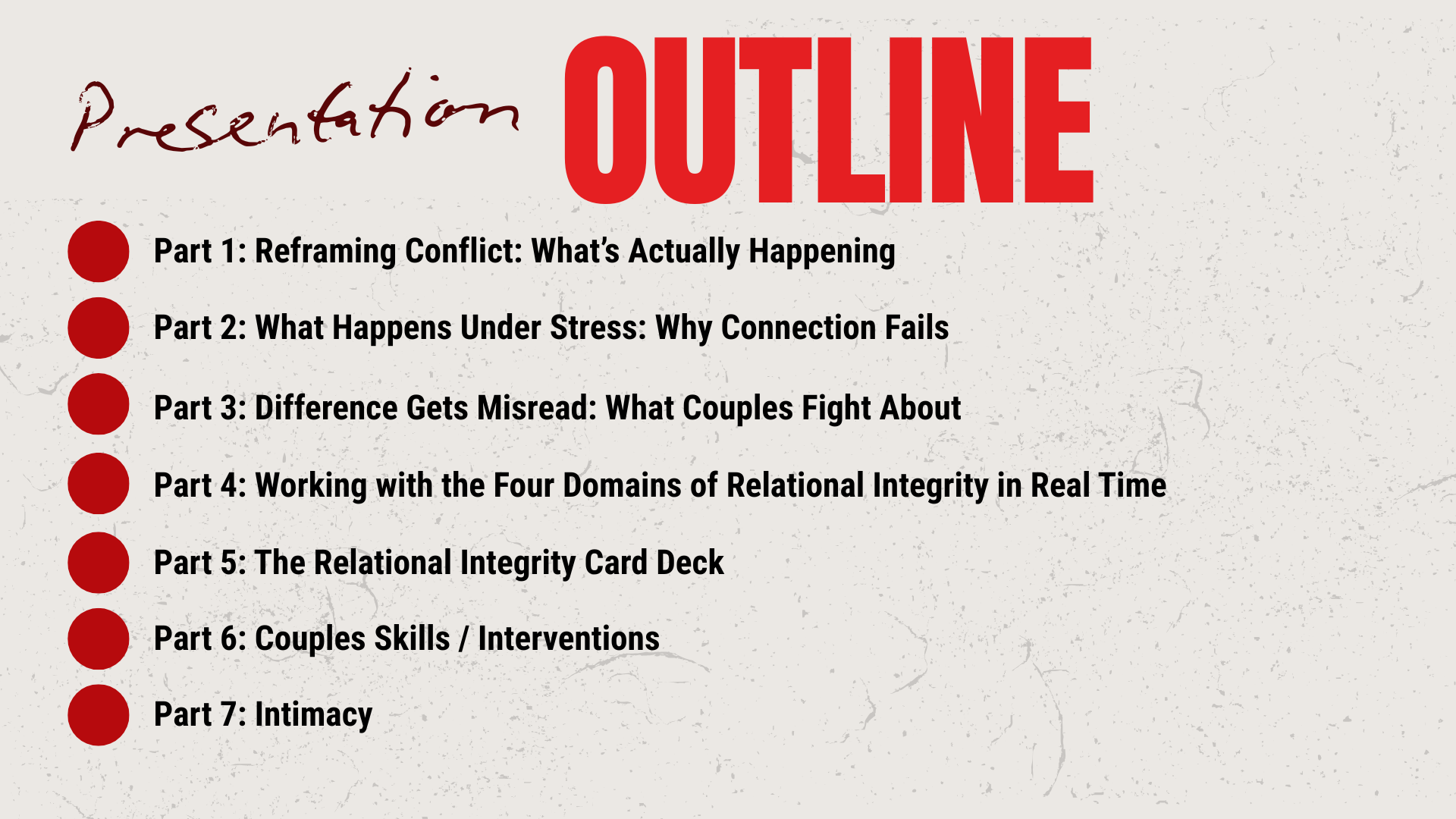
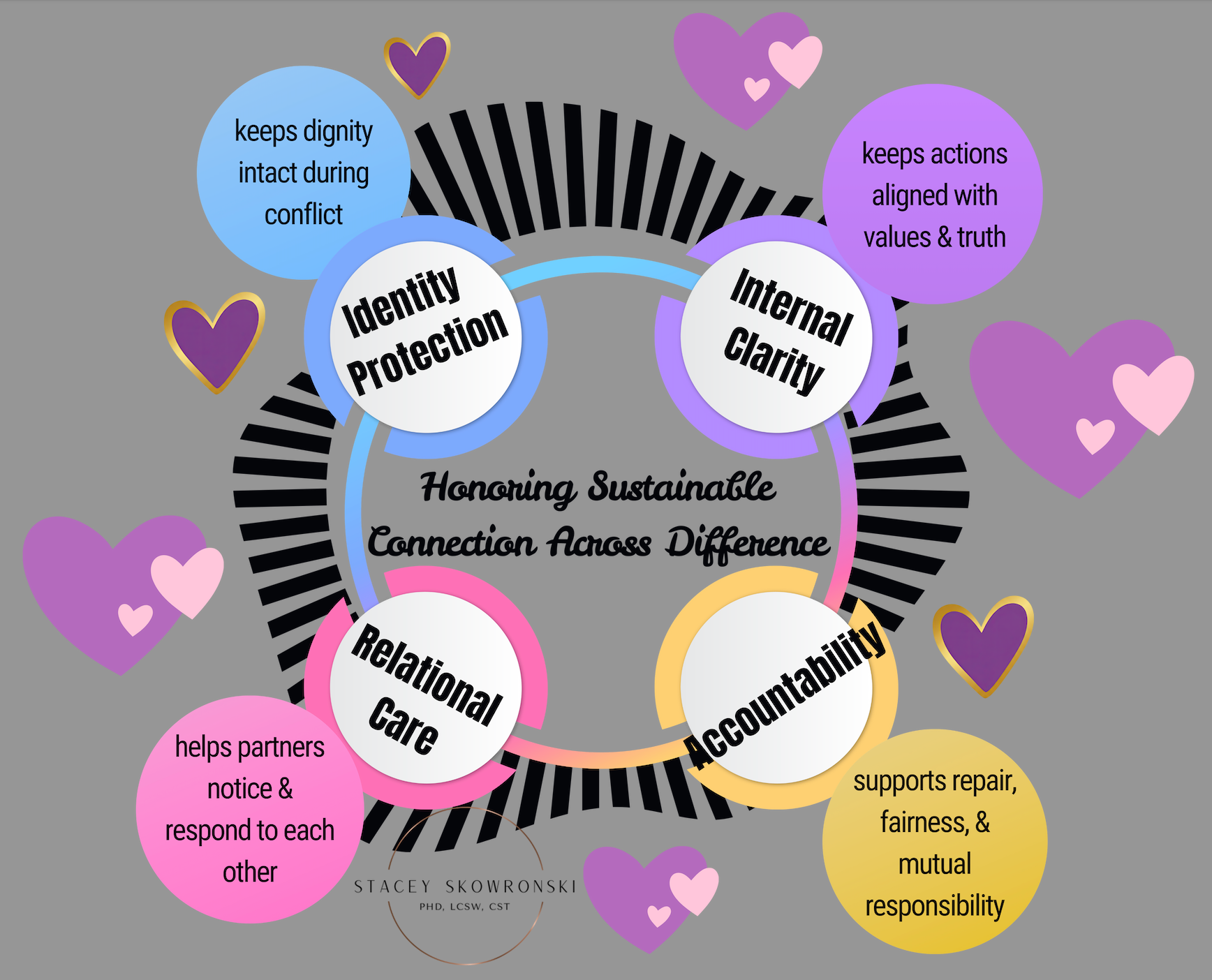
The Relational Integrity Framework.
Learn how to assess and intervene across the four domains:
✅ Identity (dignity, non-pathologizing)
✅ Coherence (internal clarity, pacing)
✅ Relational Care (attunement, responsiveness)
✅ Accountability (repair without shame collapse)
A Sneak Peak of What's Inside:
-
✅ Symbolic Emotional Tools video - a video to help identify and honor symbolic emotional tools. Emotional experience is not just cognitive - it’s organized through multiple systems, including sensory, affective, and symbolic processing. There are multiple ways people process emotional experience - through the body, through imagery and metaphor, through relational interaction, and through meaning-making. When we rely only on verbal expression, we miss access points that may be more natural and regulating for many neurodivergent individuals. For many, these systems may be accessed differently than in neurotypical communication norms. That means metaphor, imagery, and body-based awareness are not secondary forms of communication - they are often the primary way experience is organized and expressed.
-
✅ Relationship Rhythm & Integrity Pillars - a 2-page visual document that describes patterns that support healthy, flexible connection between partners. Presented through green, yellow, and red zones, they illustrate how attuned rhythm and relational integrity create safety, balance, and repair in relationship. The second page operationalizes examples of helpful dialogue and action items to move from rupture to repair.
-
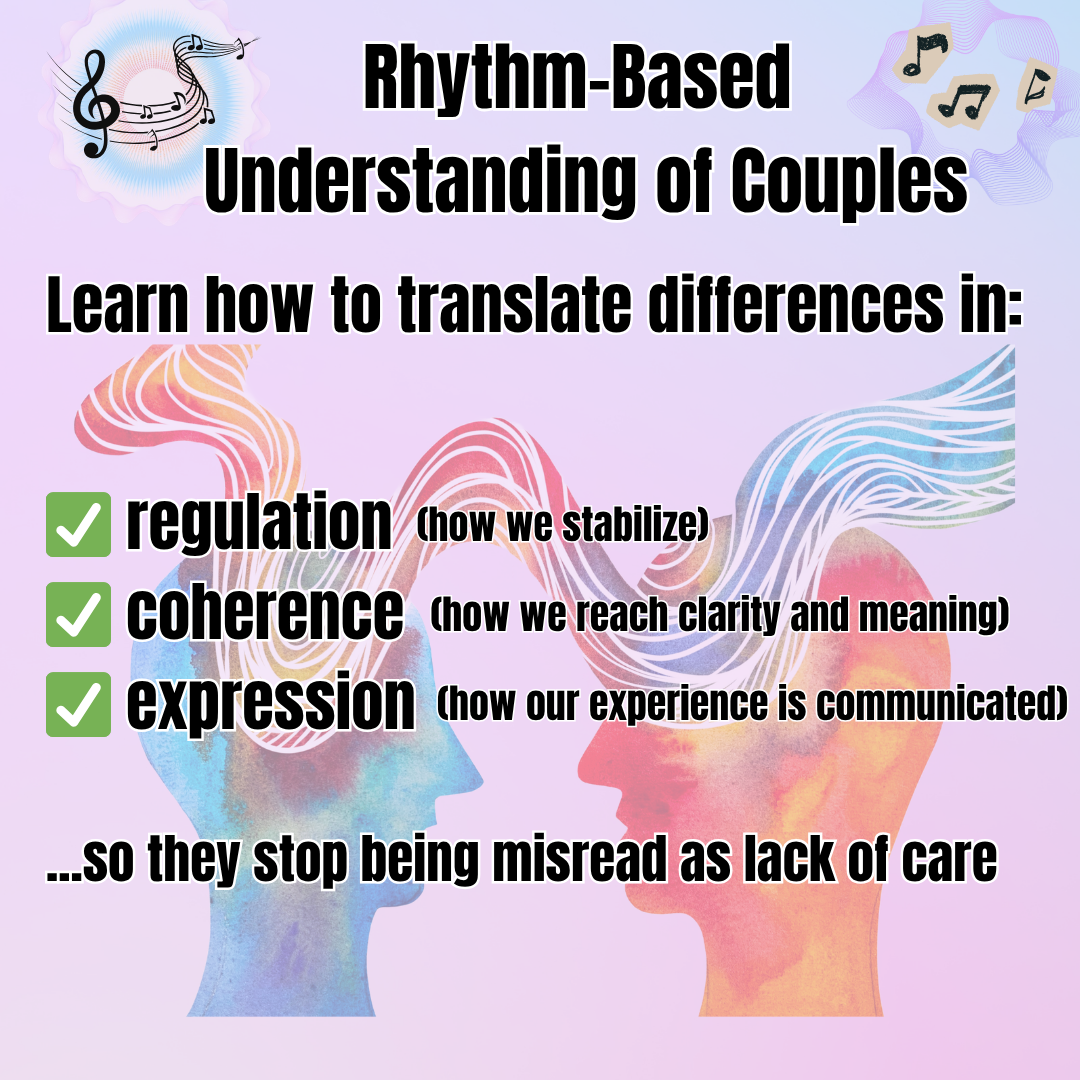
✅ The Rhythms of Shared Connection Model - translates neuroscience and sensory research into a relational framework for understanding how different nervous systems connect, regulate, and repair. It recognizes that partners may move at different tempos - some finding safety in predictability, others in activation - and that connection emerges not from sameness but from responsive pacing and mutual regulation. By seeing rhythm variation as difference rather than deficit, this model offers a shared language for safety, empathy, and co-created calm.
-
✅ Relational Integrity Sample Goals (for the therapist) - a list of sample goals that align with the Relational Integrity Model, with action items to repair integrity threats, and to facilitate co-regulation across difference.
-
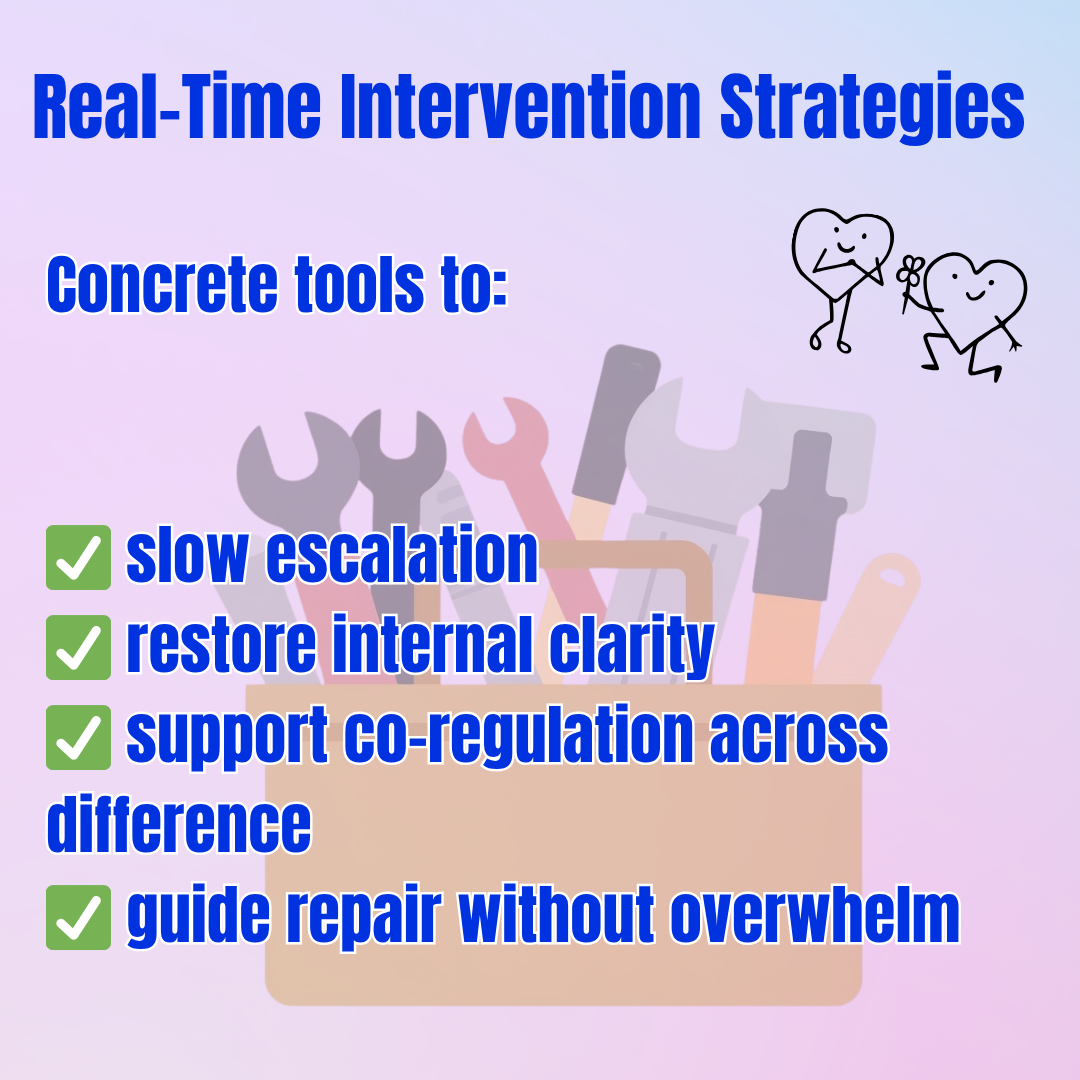
✅ Relational Integrity Couples Work Interventions (for the therapist) - a document that provides 129 intervention ideas through interactive drop-down menus to help name the misalignment, slow the system, restore internal clarity, support clear signaling, translate and attune across difference, and facilitate coordinate/repair within the couple system.
✅ Up and Down-Regulation Visual- a visual for up- and down-regulation ideas to support rhythm coordination and synchrony
This training is designed to increase competency in community members who have the awesome privilege of working with neurodivergent couples experiencing relational misattunement.
Disclaimer: The Protection to Connection: Relational Integrity for Neurodivergent Couples Training and Relational Integrity Cards are educational and reflective tools. They are not therapy, clinical supervision, diagnosis, or a substitute for mental health care. Use of this deck is intended to support relational awareness, coherence, and ethical engagement. Professionals are responsible for applying these materials within the scope of their own training, license, and ethics.